Adaptation to partial shade in dryland
An opportunity after the destruction
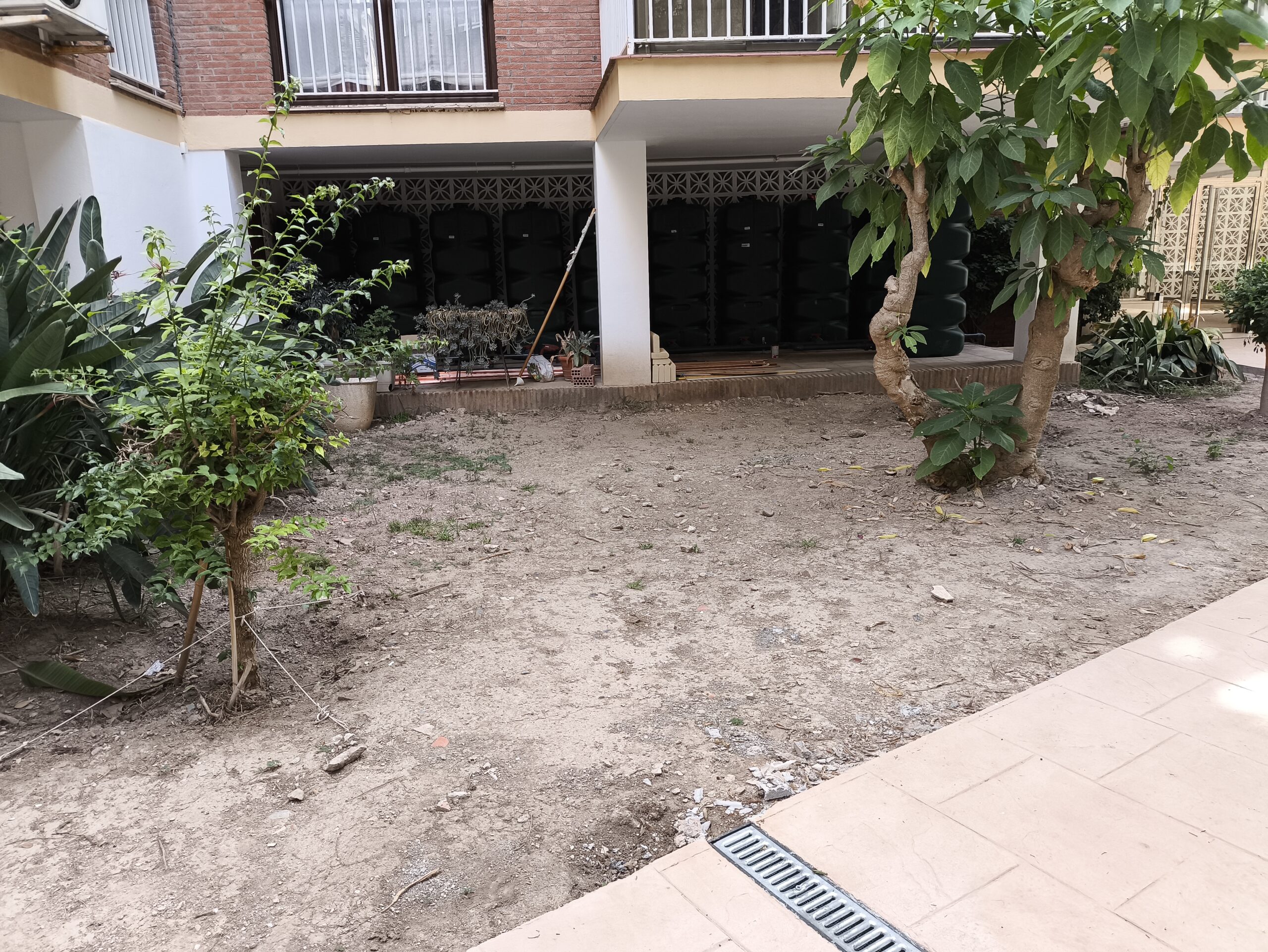
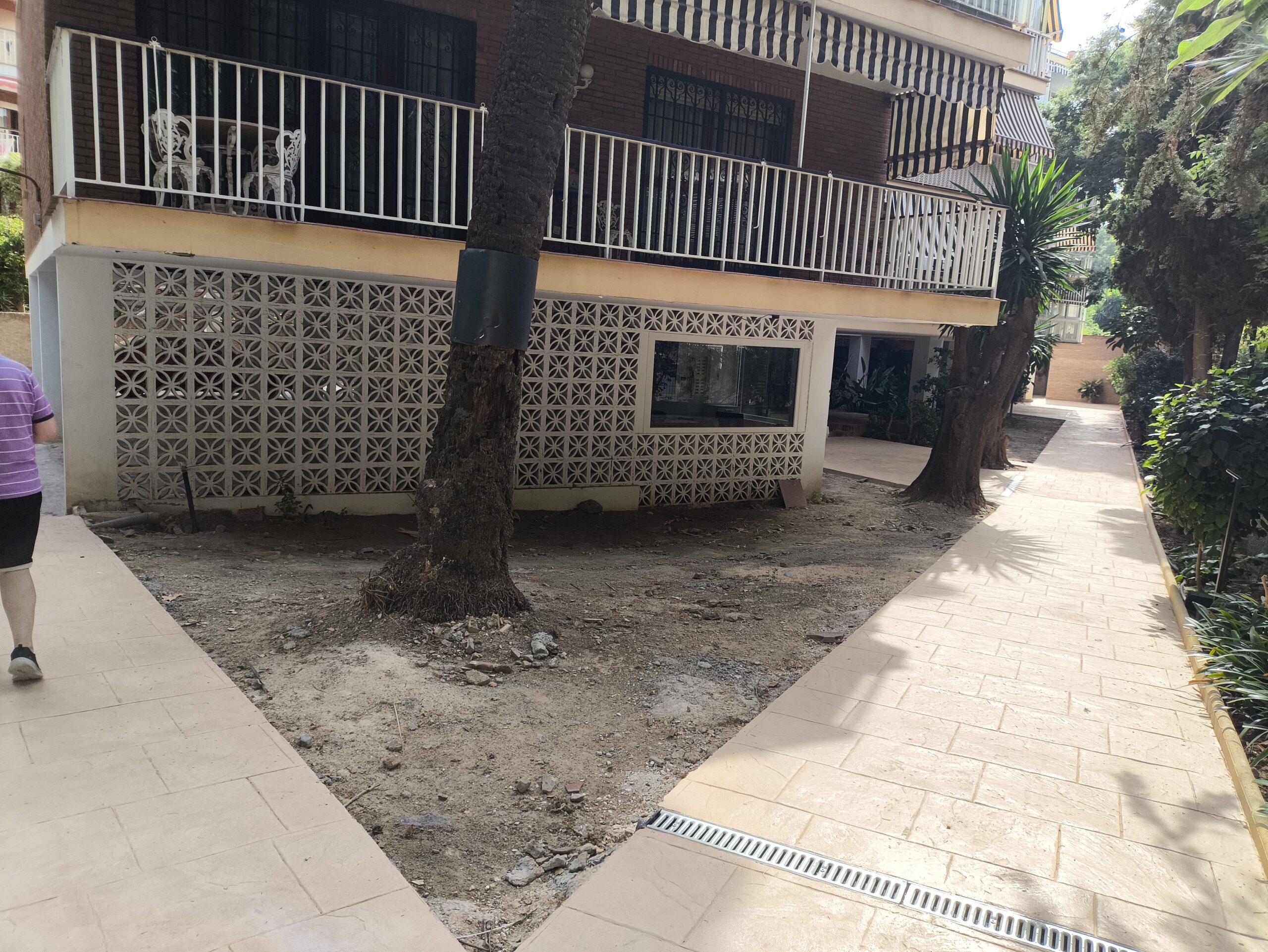
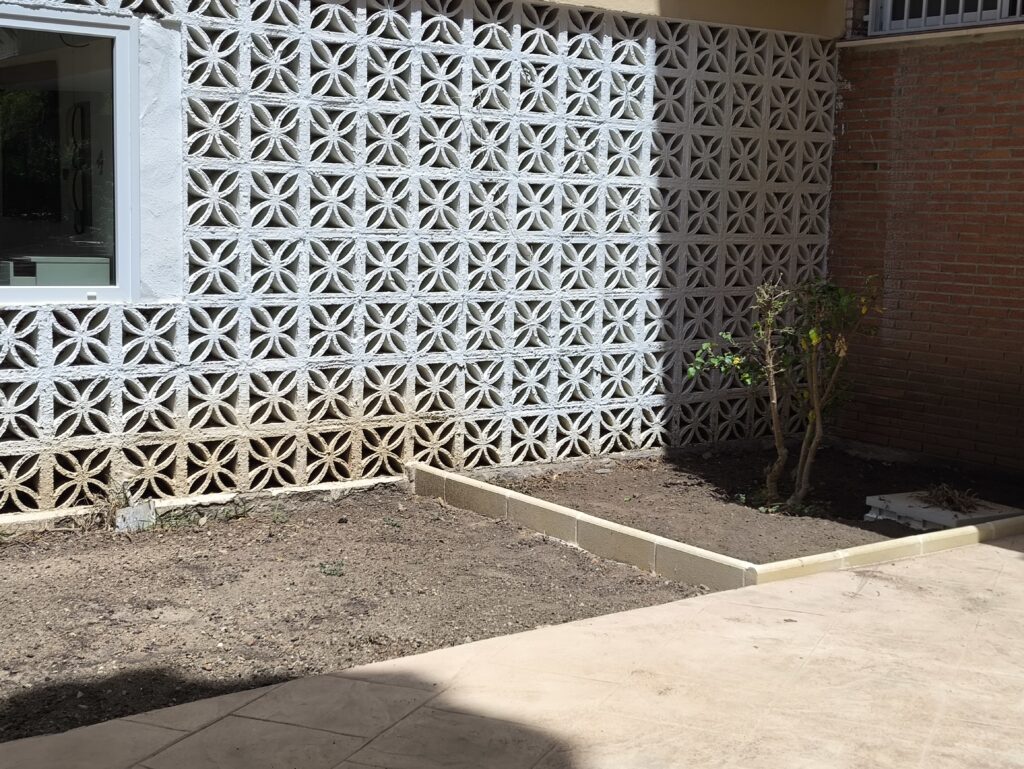
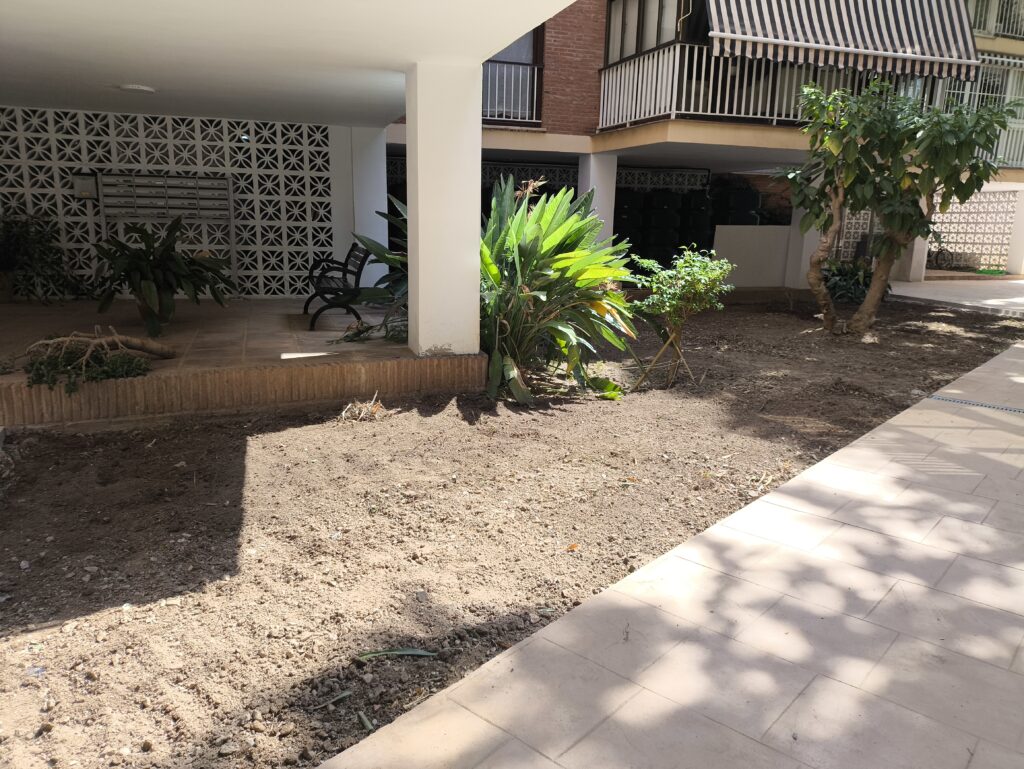
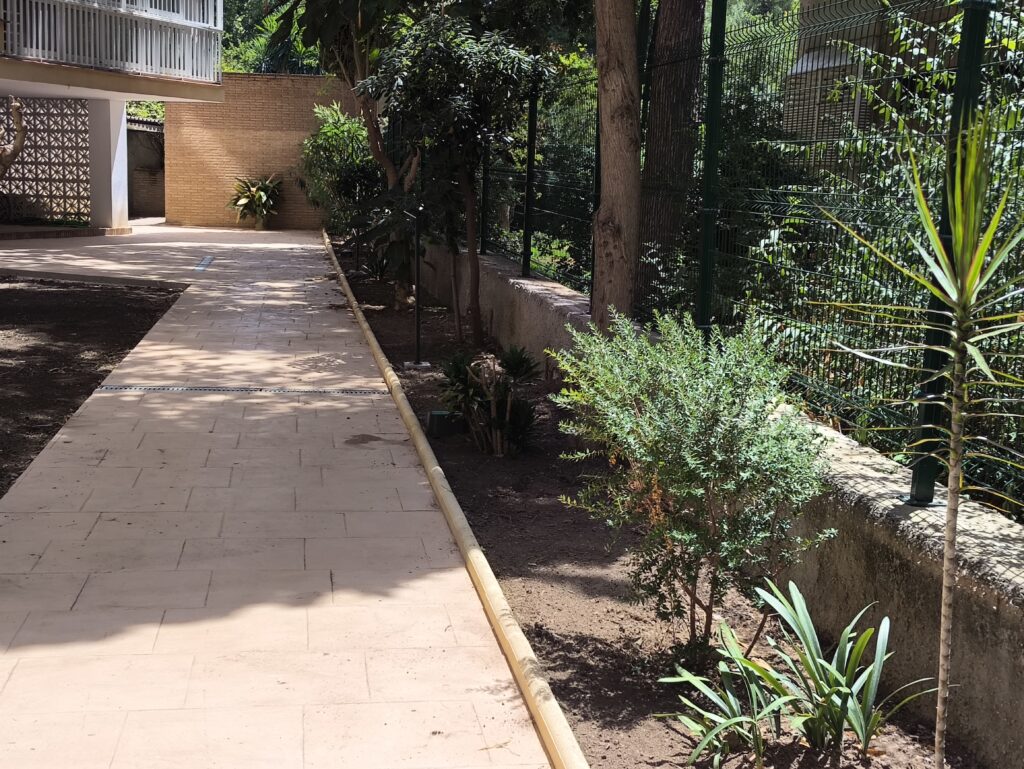
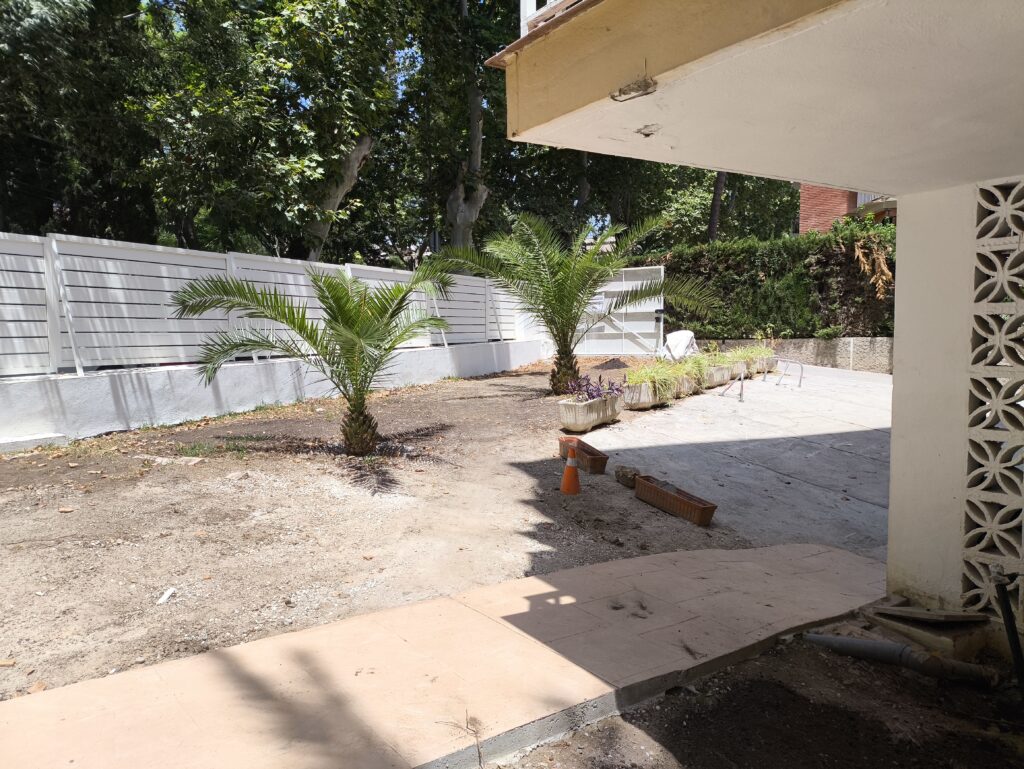
In this residential development in El Limonar, construction work had devastated the garden. The owners saw an opportunity to improve its resilience, as the previous year’s irrigation restrictions had severely impacted it. We proposed creating three distinct zones. In the garage, we would replace the Bermuda grass lawn with a Lippia ground cover, irrigated by sprinklers. In the flowerbed bordering the neighboring property, we would install drip irrigation, maintaining the basic structure of what remained of the garden and filling it with succulents to increase ground cover. In the rest of the garden, we designed an ecological garden without irrigation, adapted to the very low sunlight conditions of the site.

The area is mostly shaded by large trees—plane trees and cypresses—and we identified the sunniest areas, which receive an average of four hours of sun per day. We observed several plants that were not thriving: hibiscus lacking light, abundant bougainvillea with excessive moisture and insufficient light, and agapanthus that were not flowering.
Preparation of the land
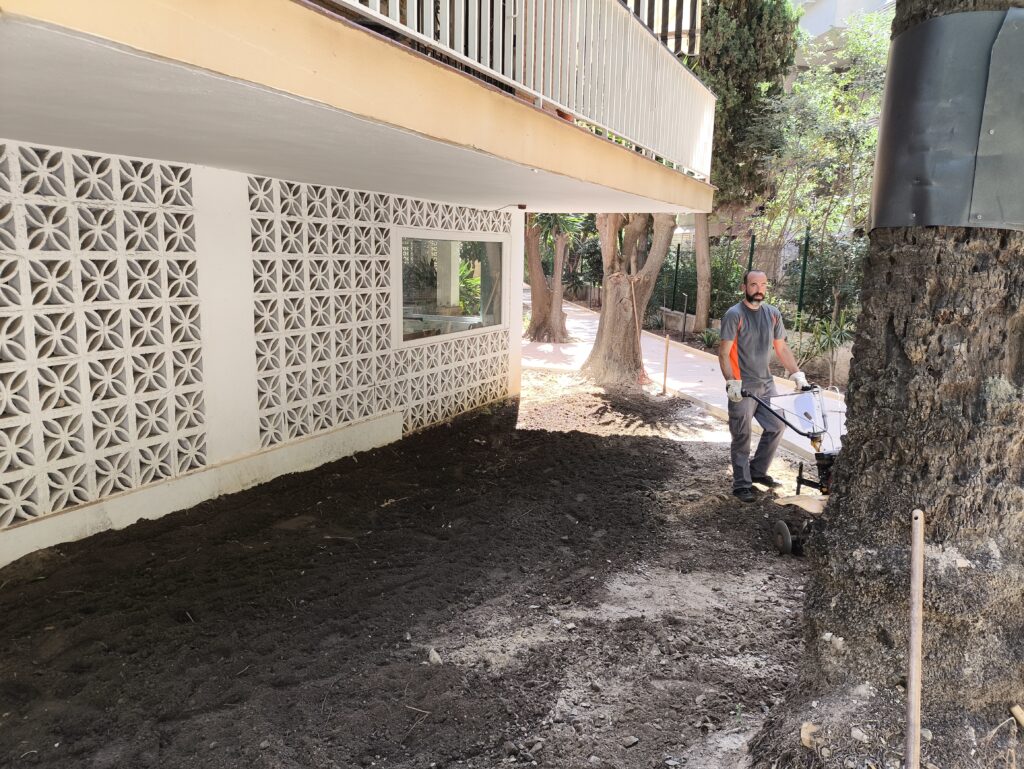
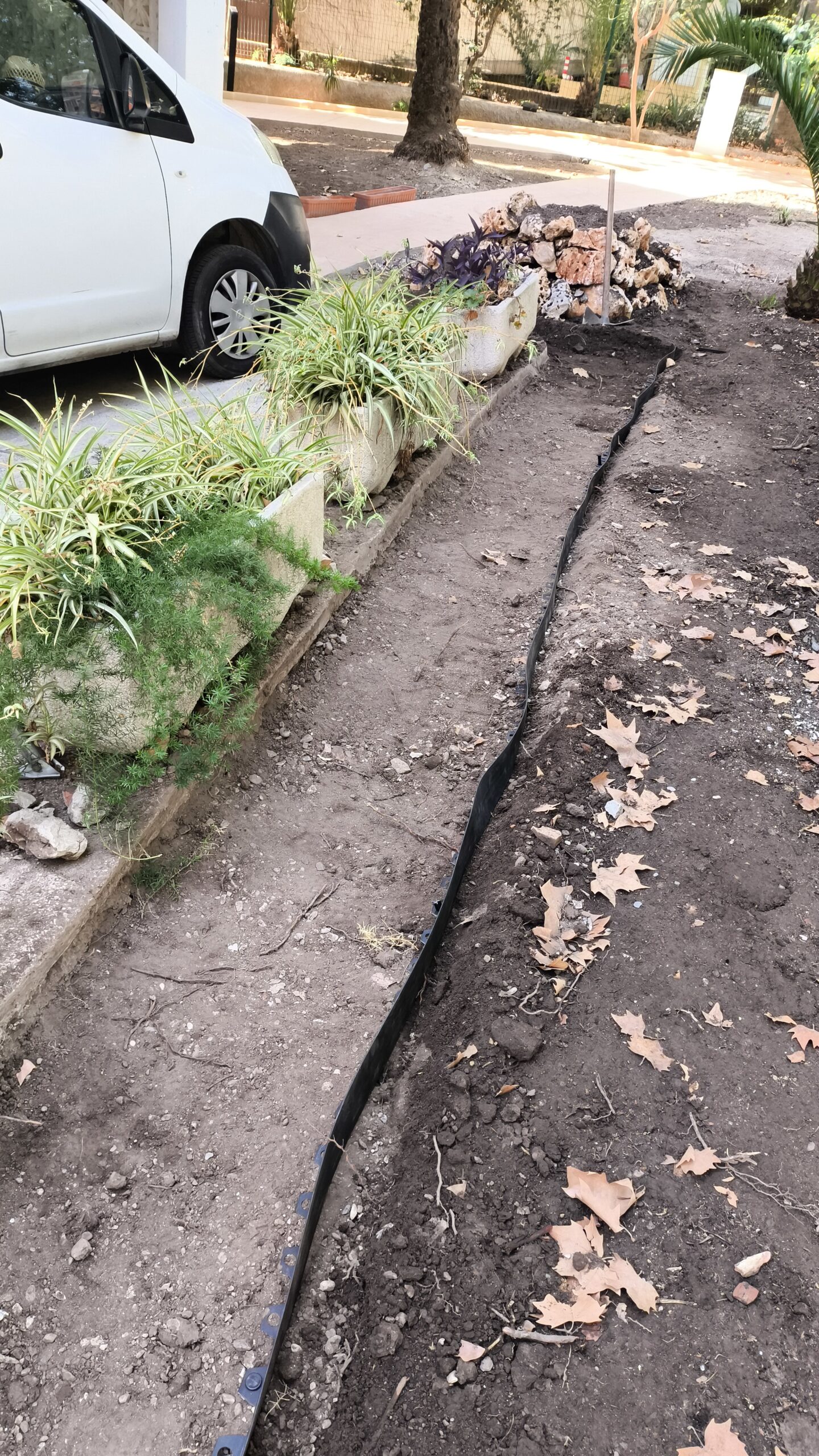
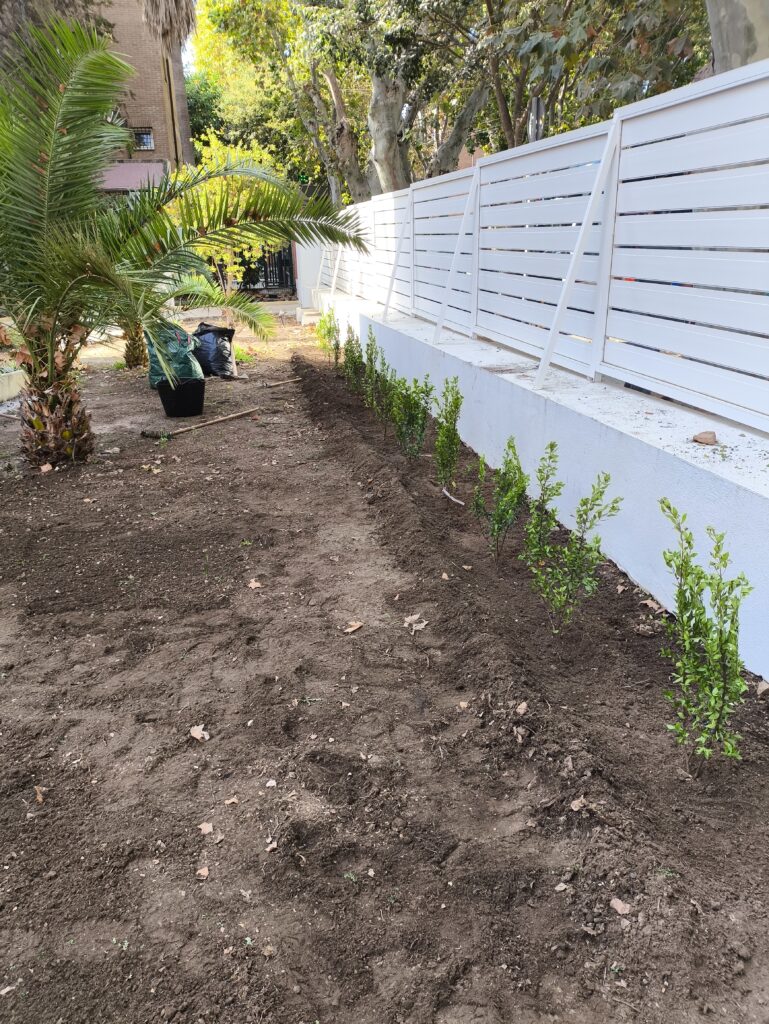
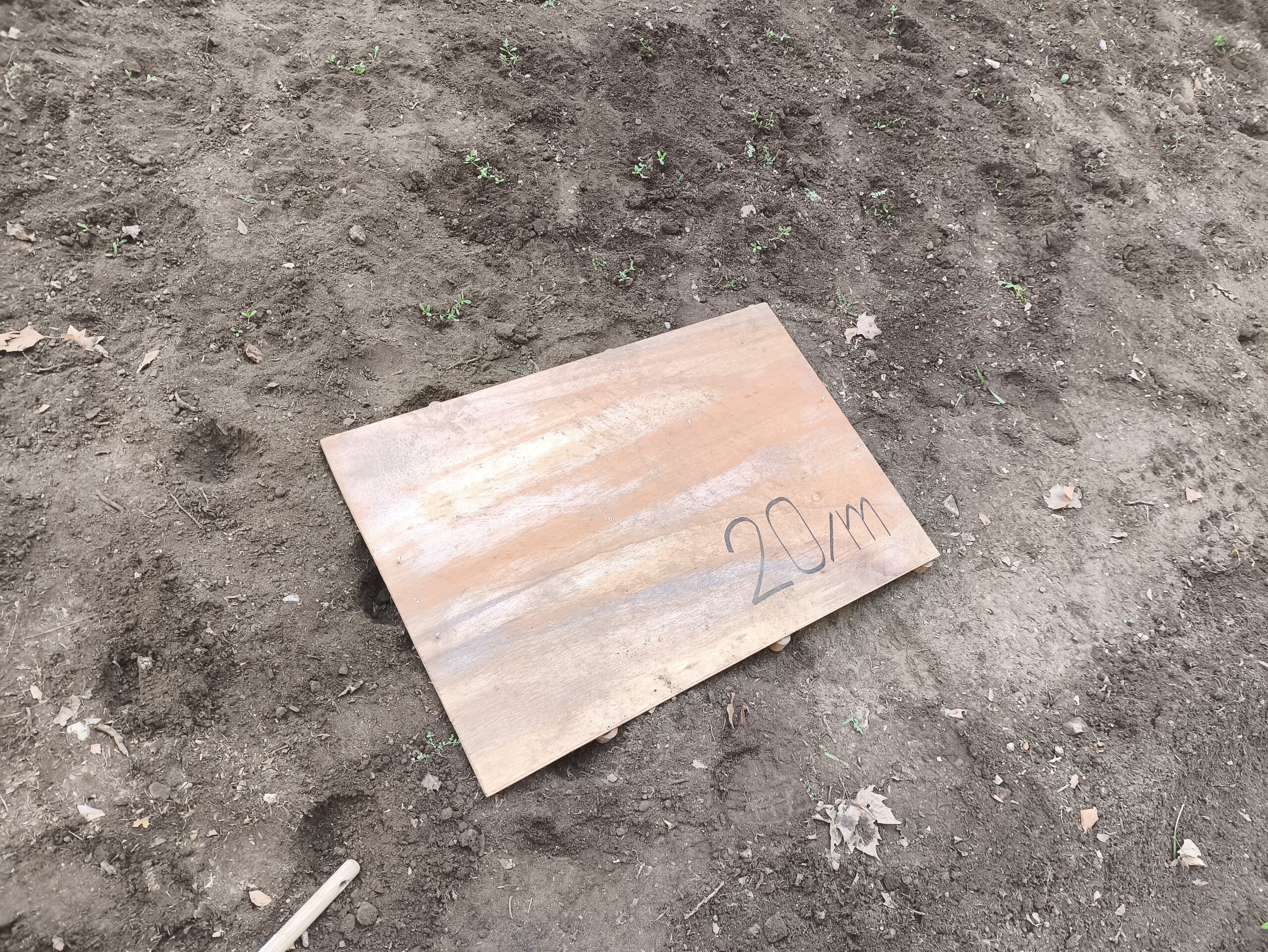
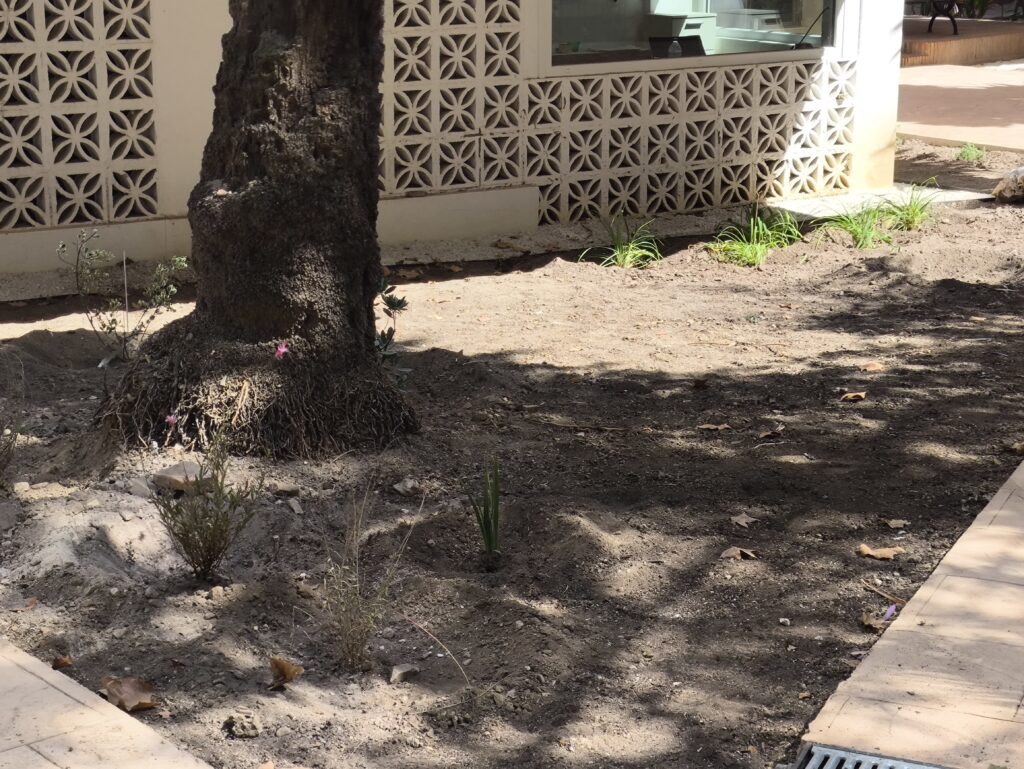
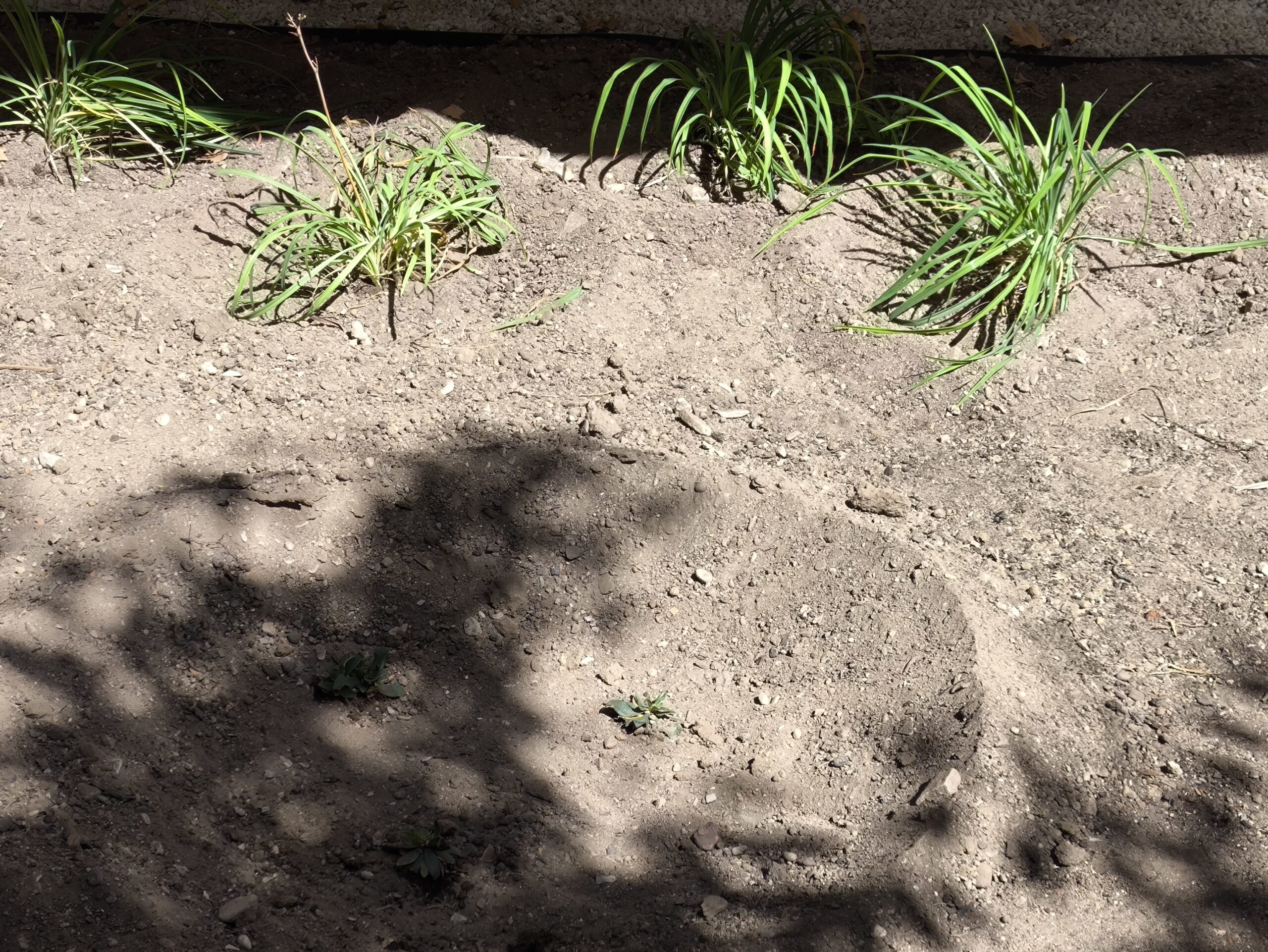
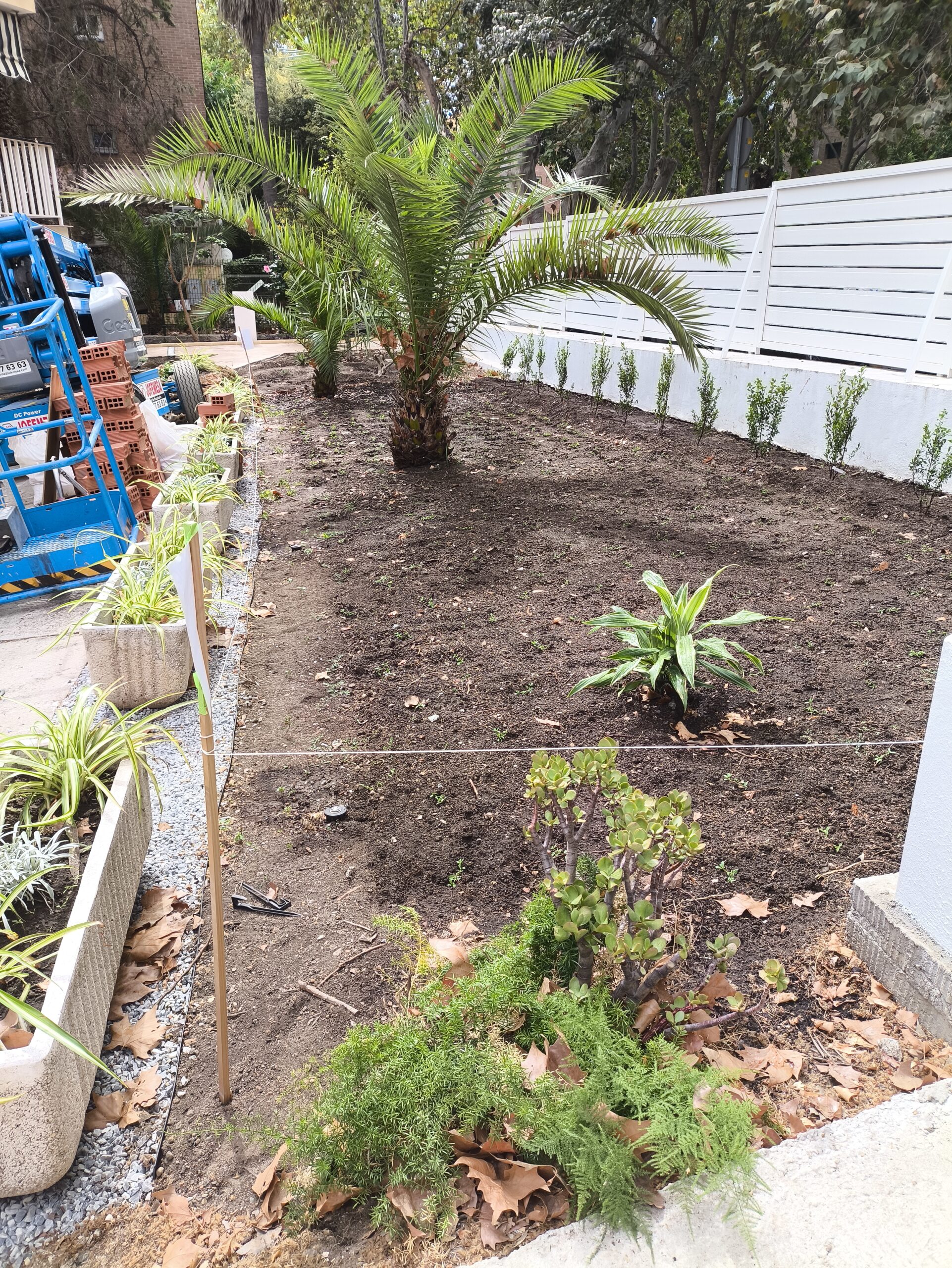
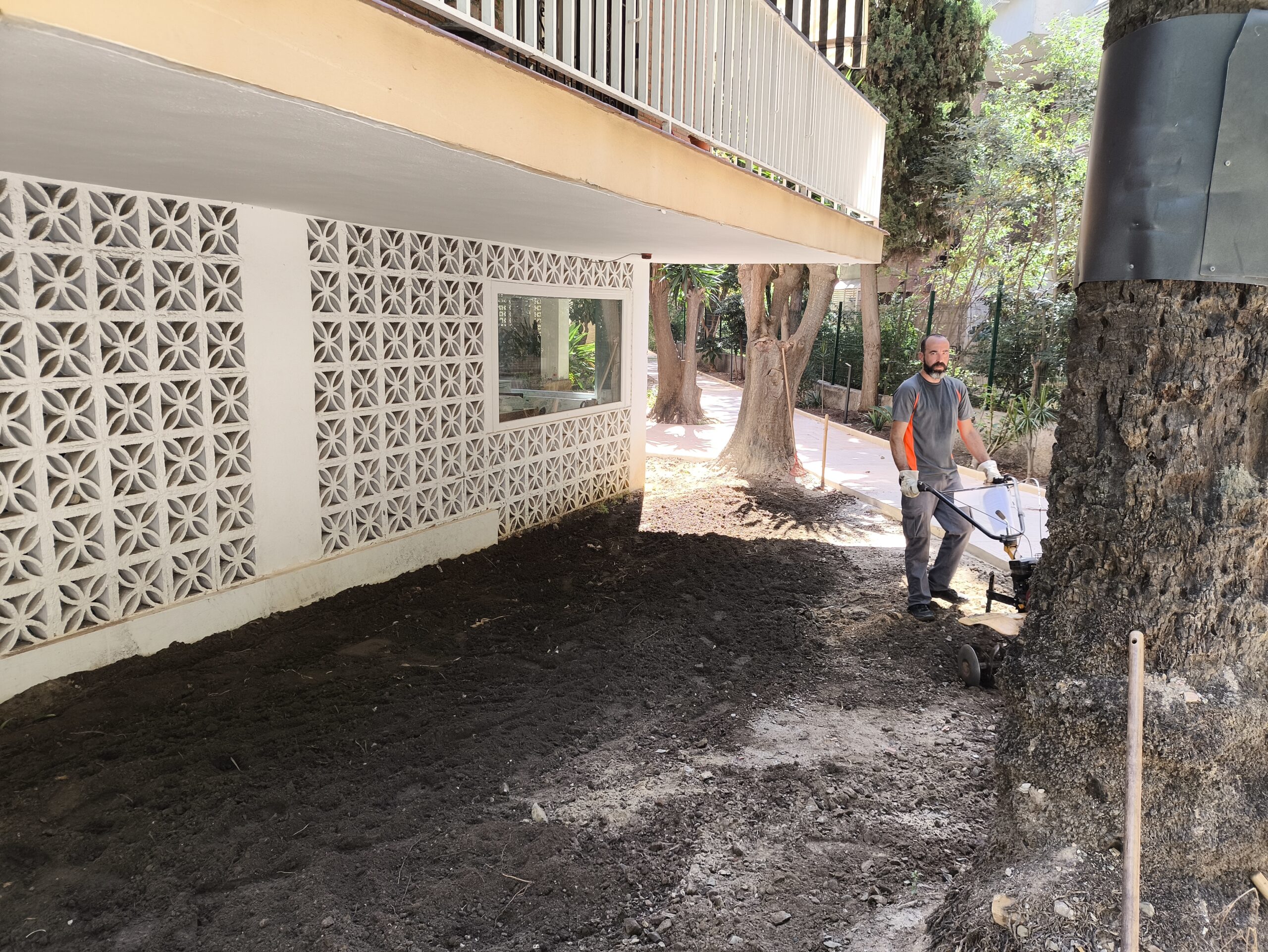
We removed the debris and tilled the larger areas with a rototiller, adding topsoil since the construction had left a difference in level between the concrete path and the soil.
While tilling, more debris kept appearing, perhaps from previous construction work.
An improvised rockery
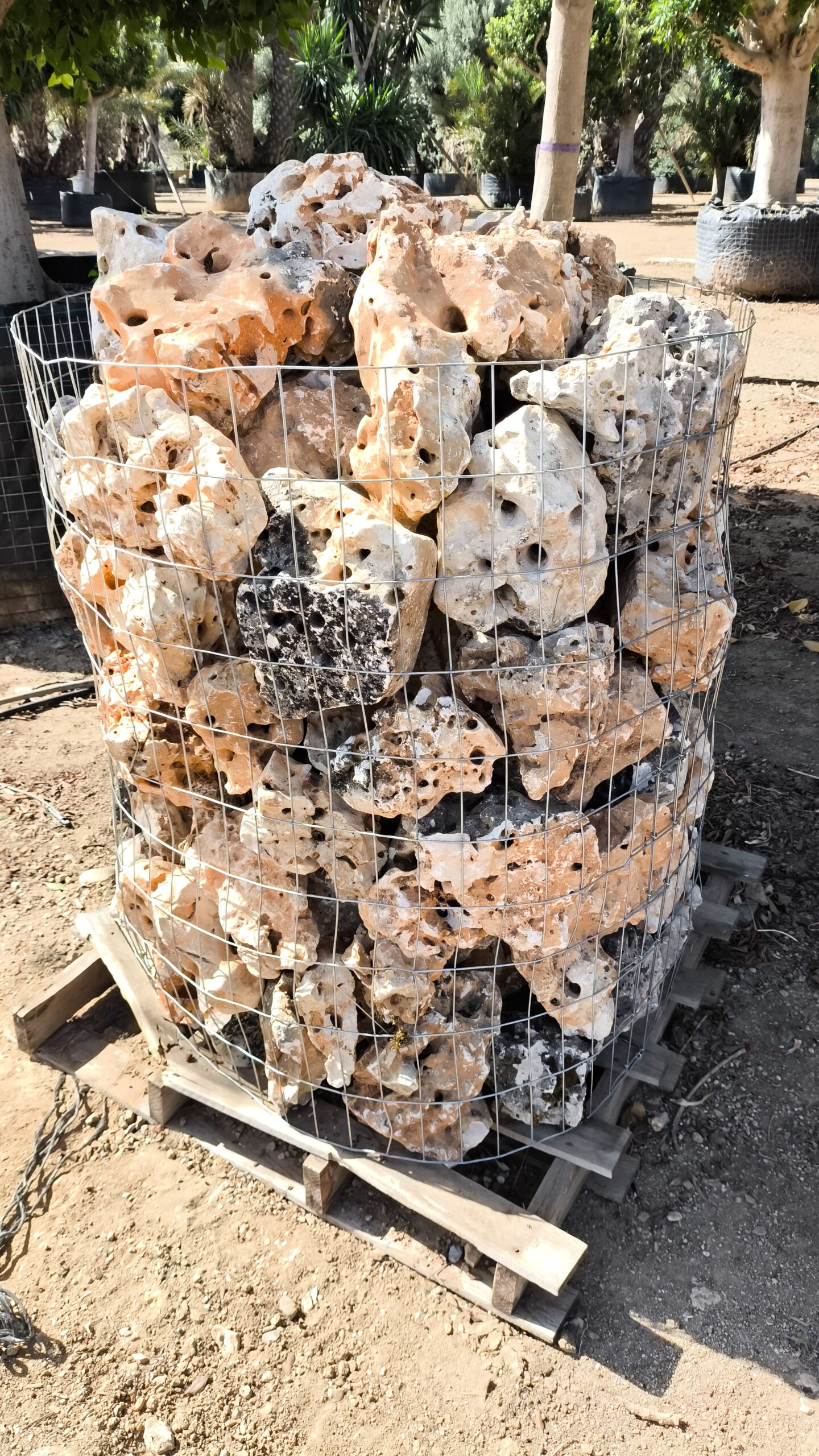
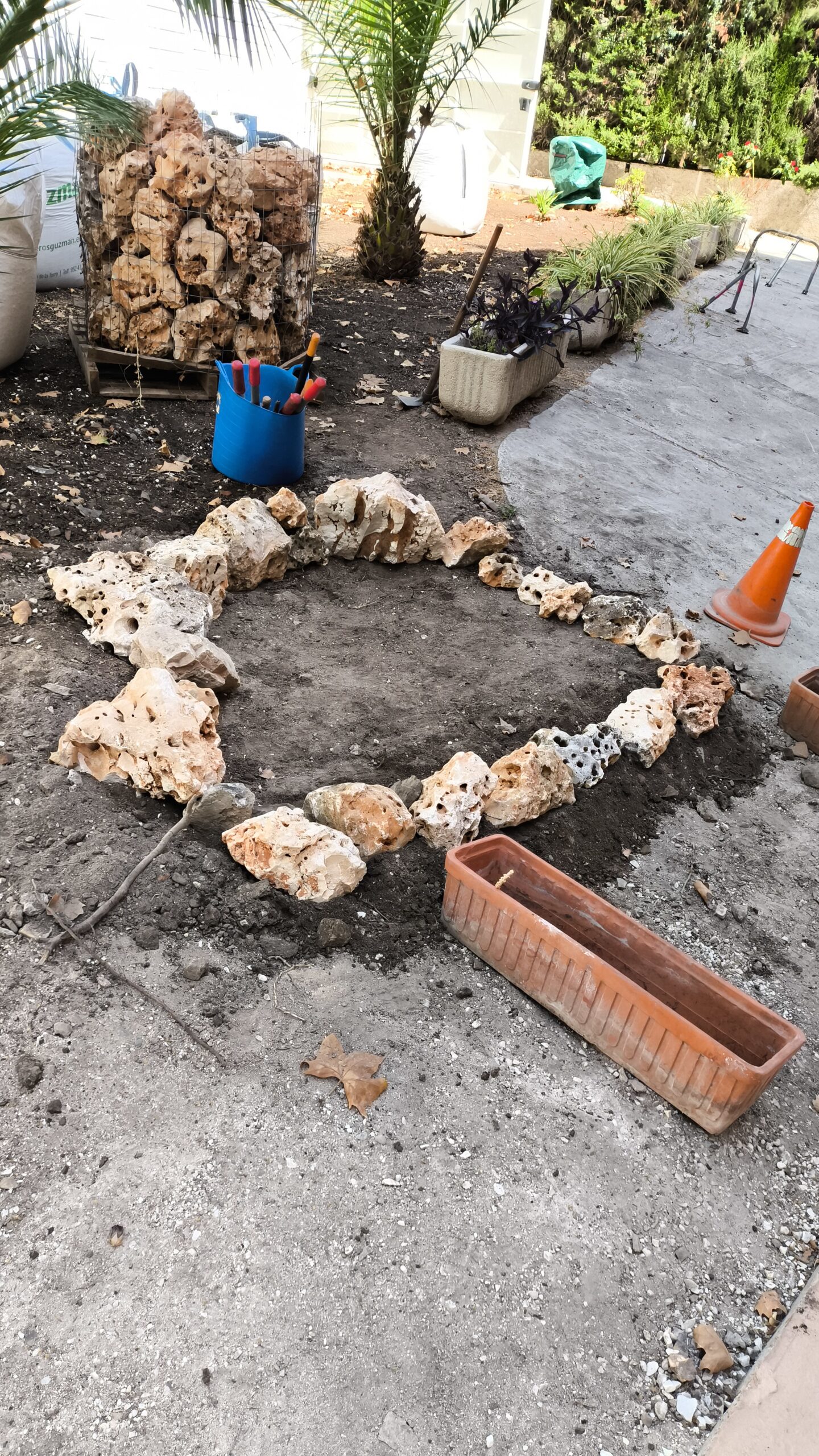
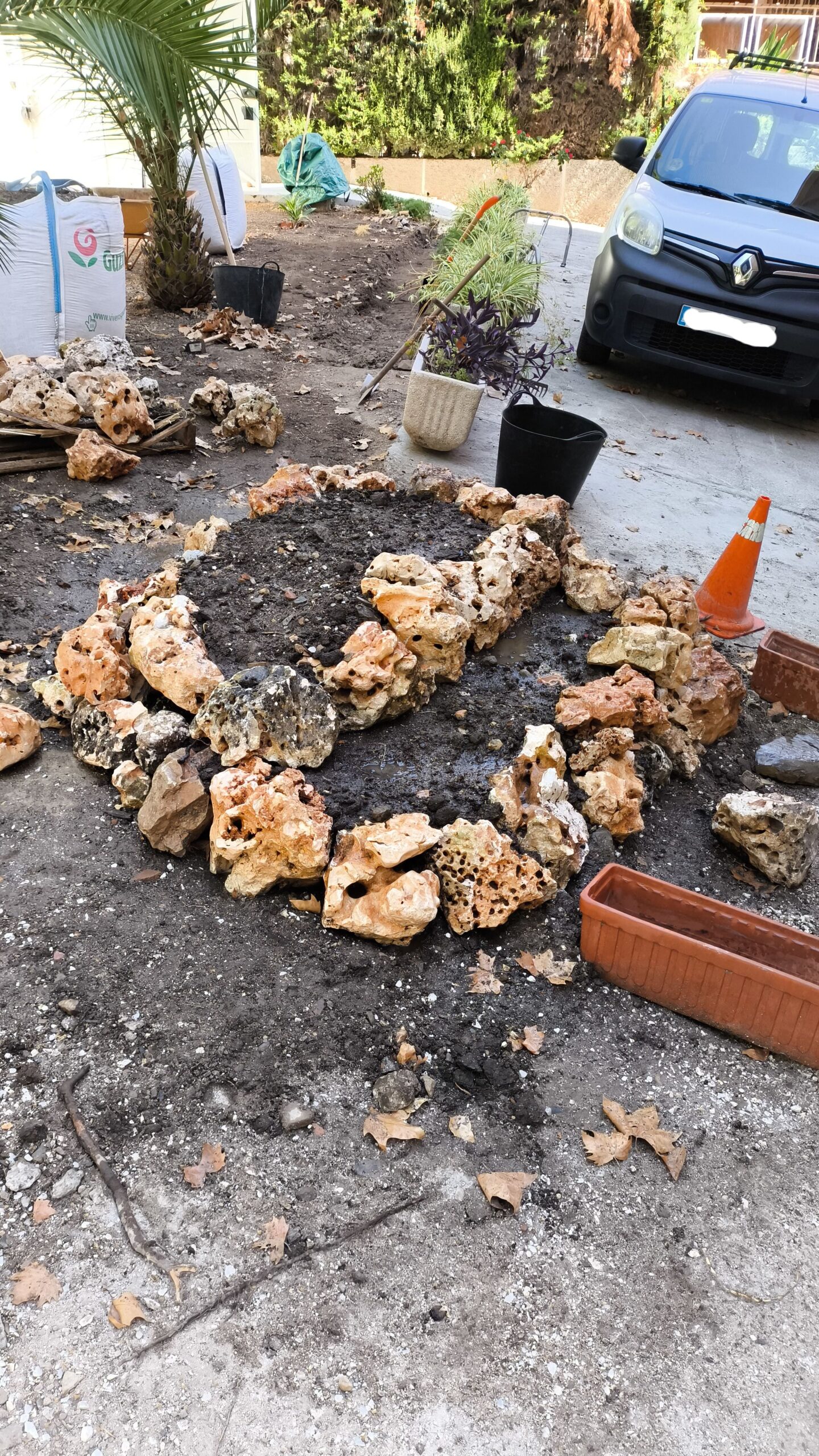
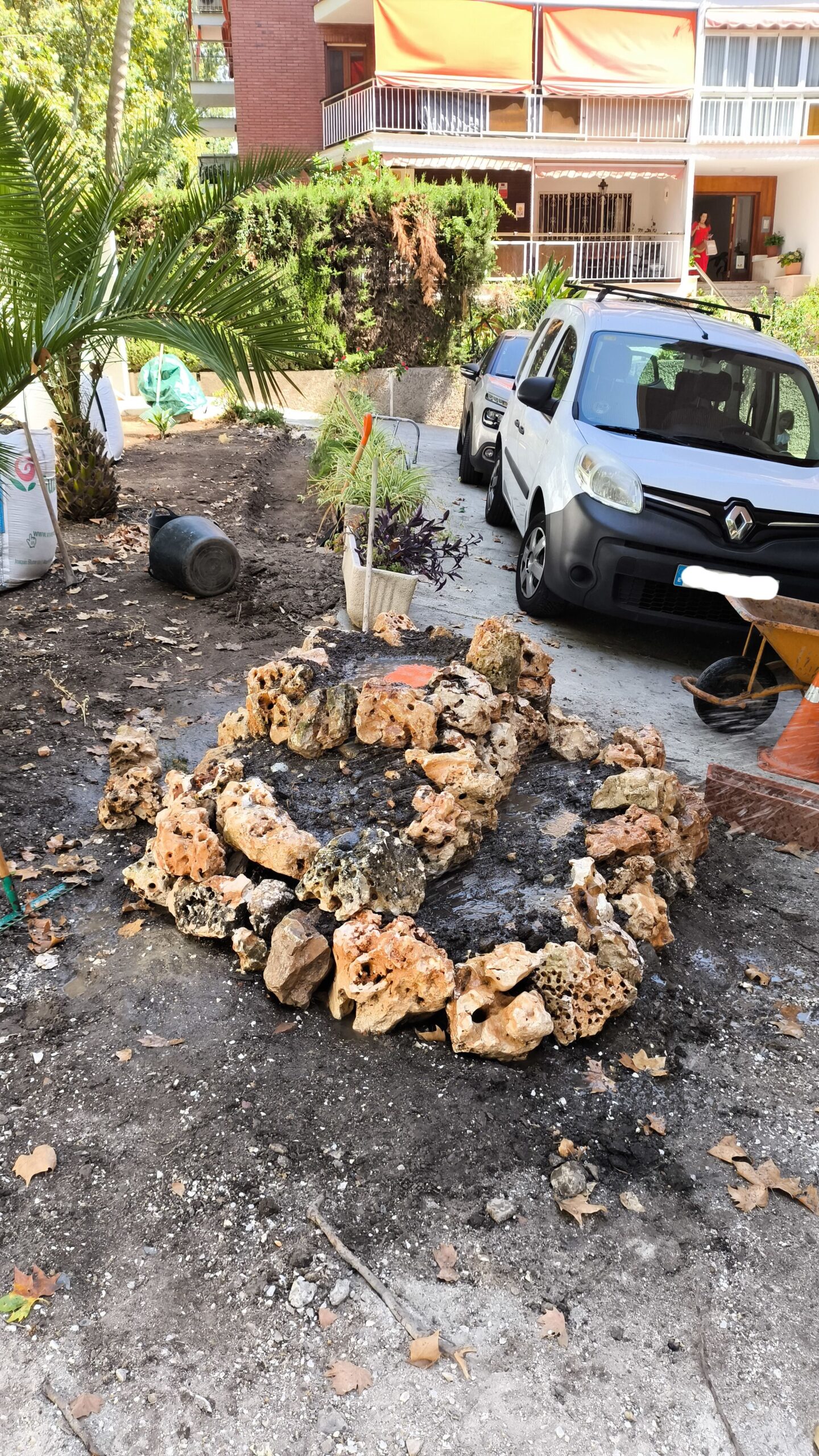
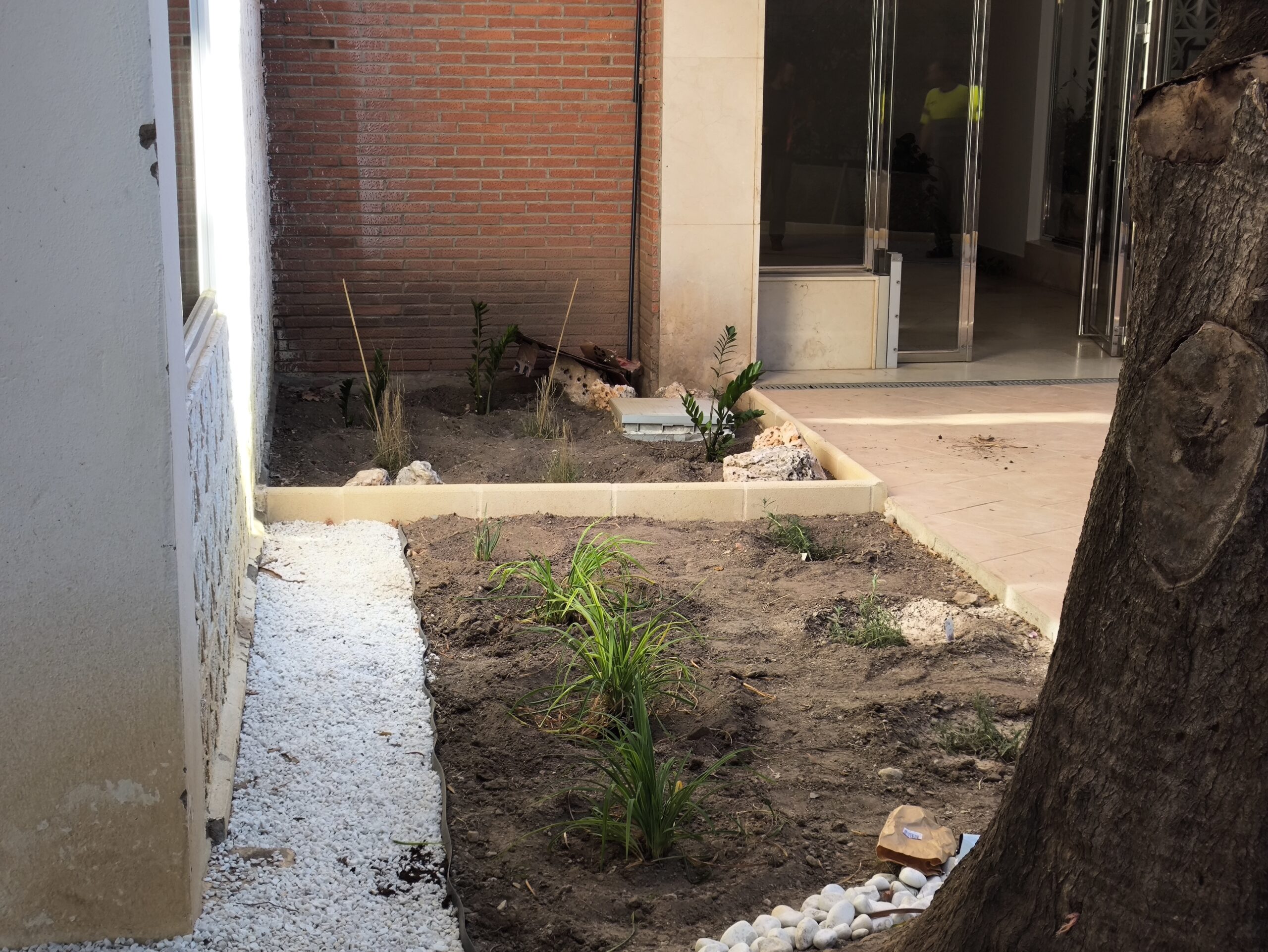
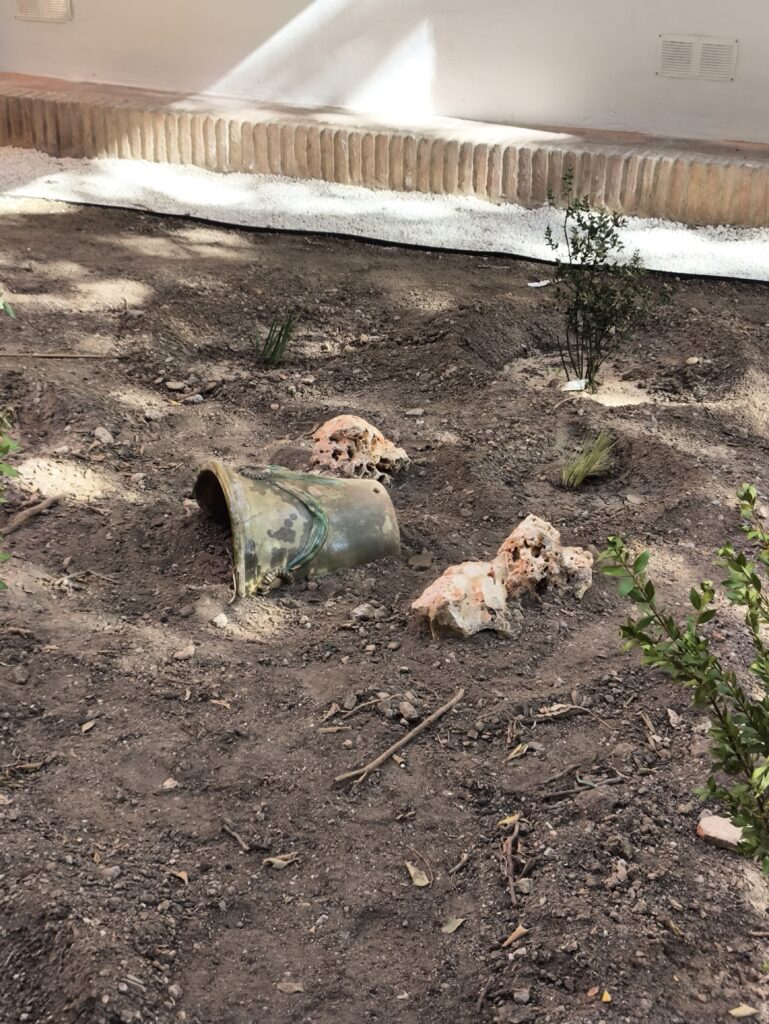
During the cleanup, it became necessary to block vehicle access to the garden, and what better way to do that than by installing a rockery? Now there’s only enough room to get in with a wheelbarrow.
gravel
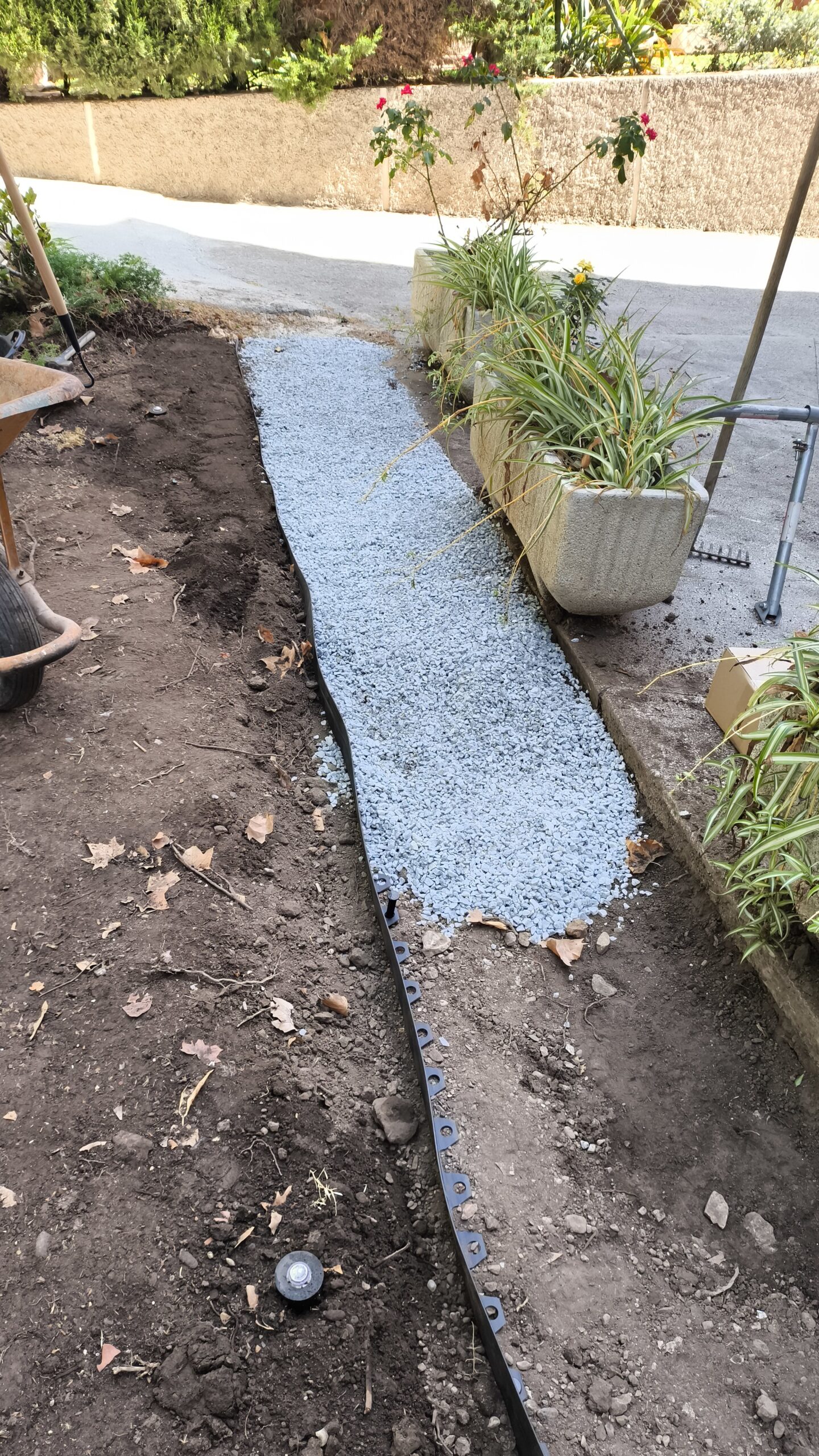
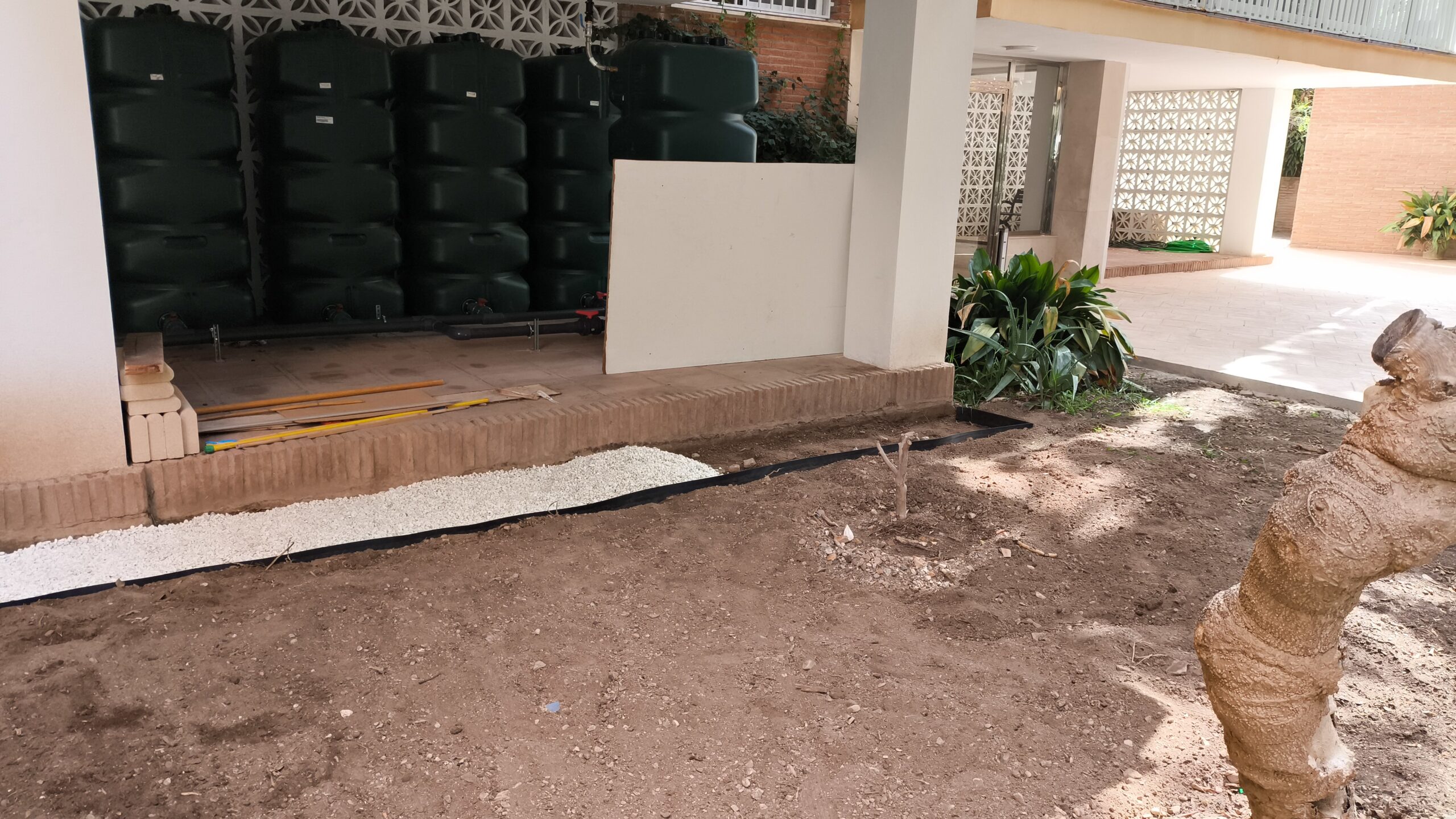
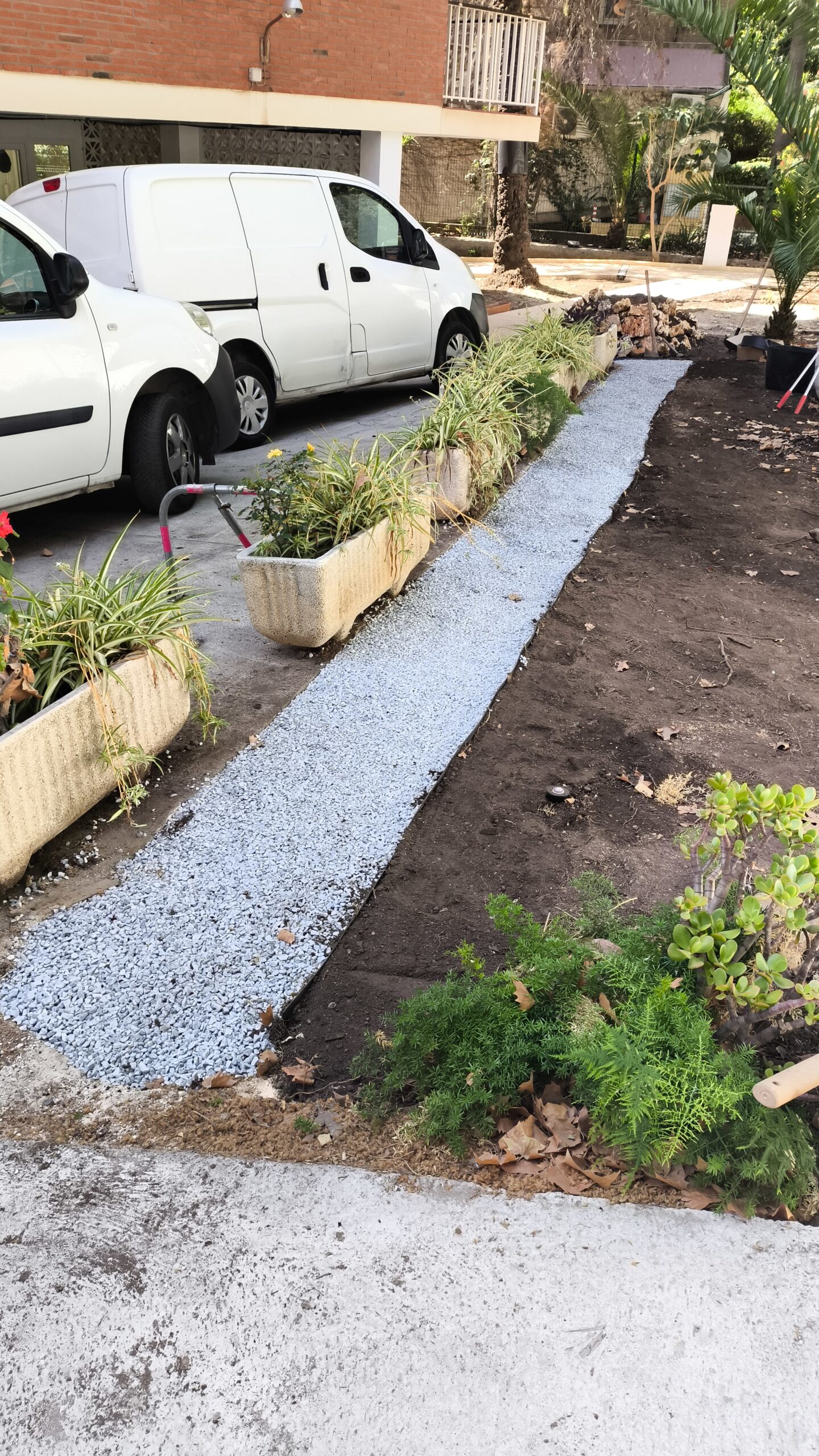
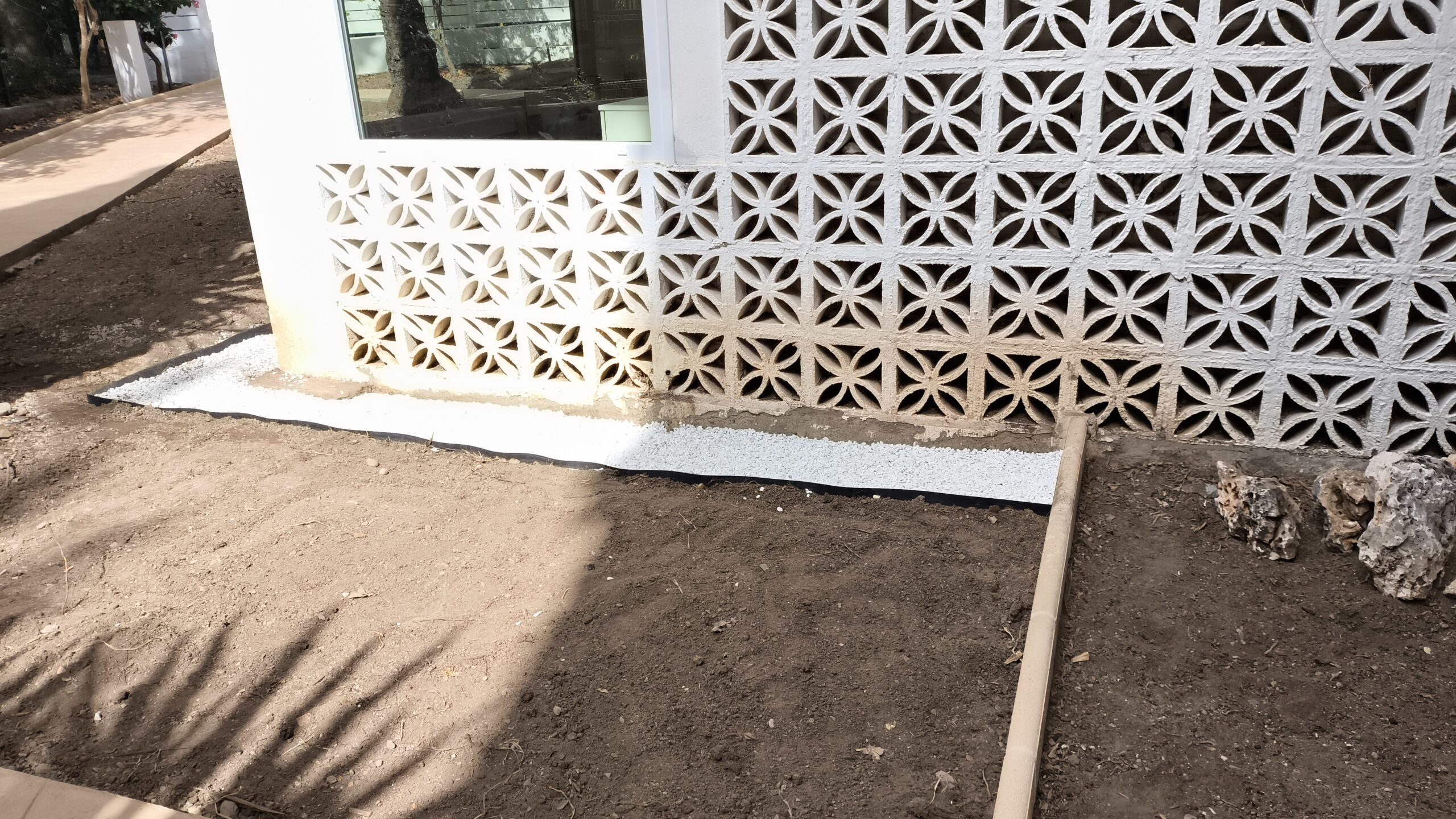
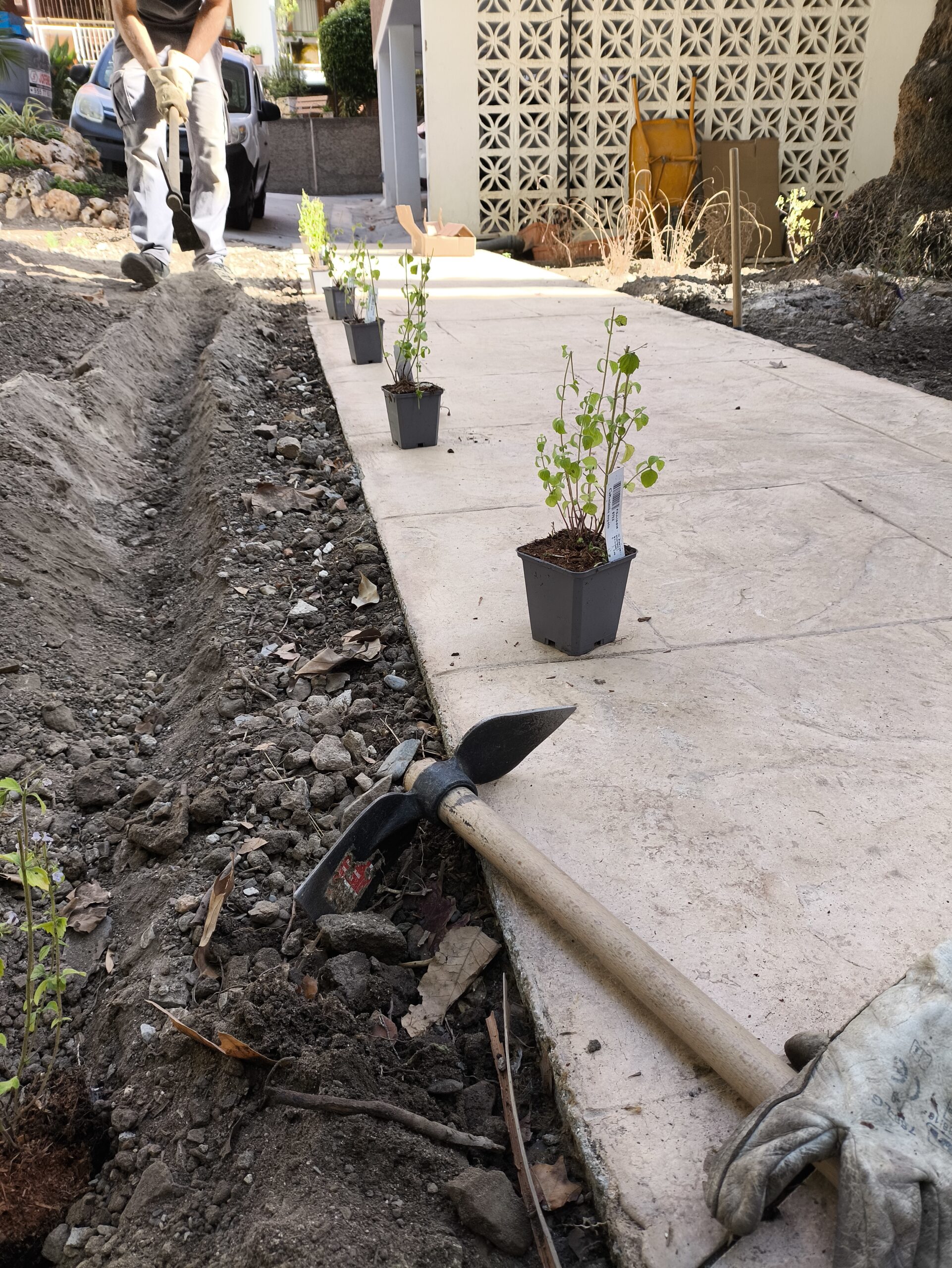
In advance of the design process, we installed several bands of gravel along the shadiest walls to prevent dampness and facilitate building maintenance. We also laid gray gravel under the heavy planters in the parking to suppress weeds and allow the planter’s color to stand out.
The Design
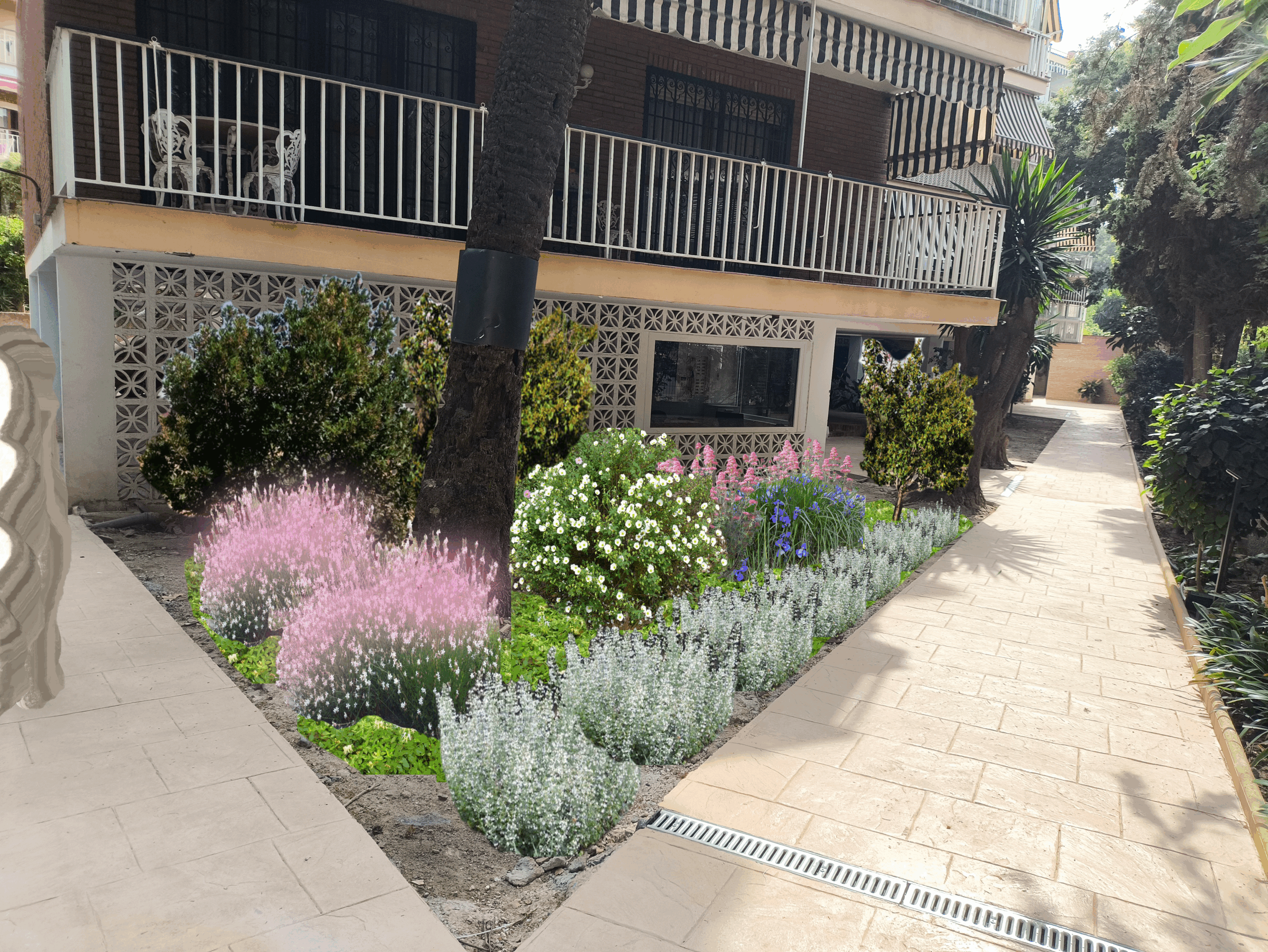
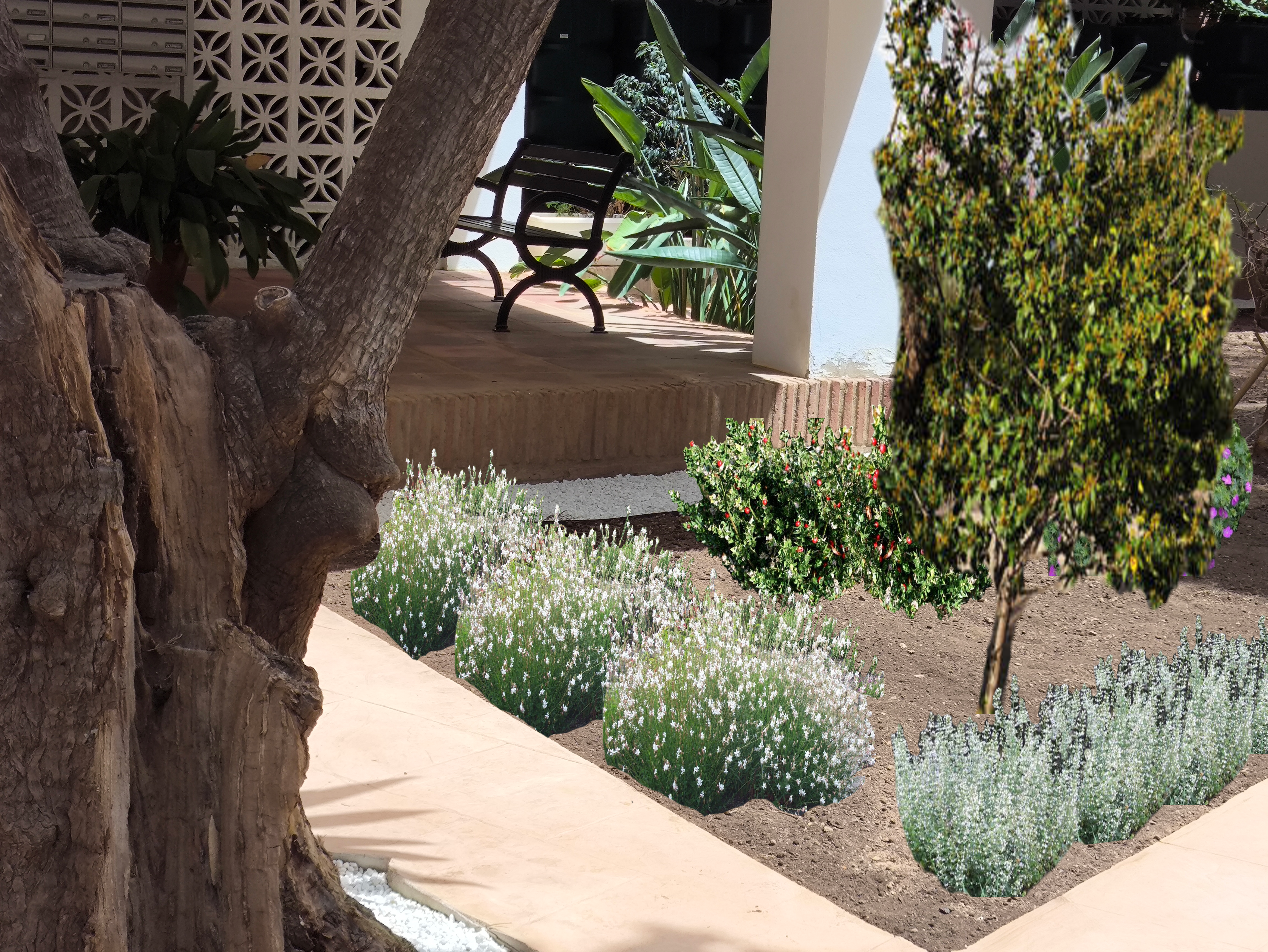
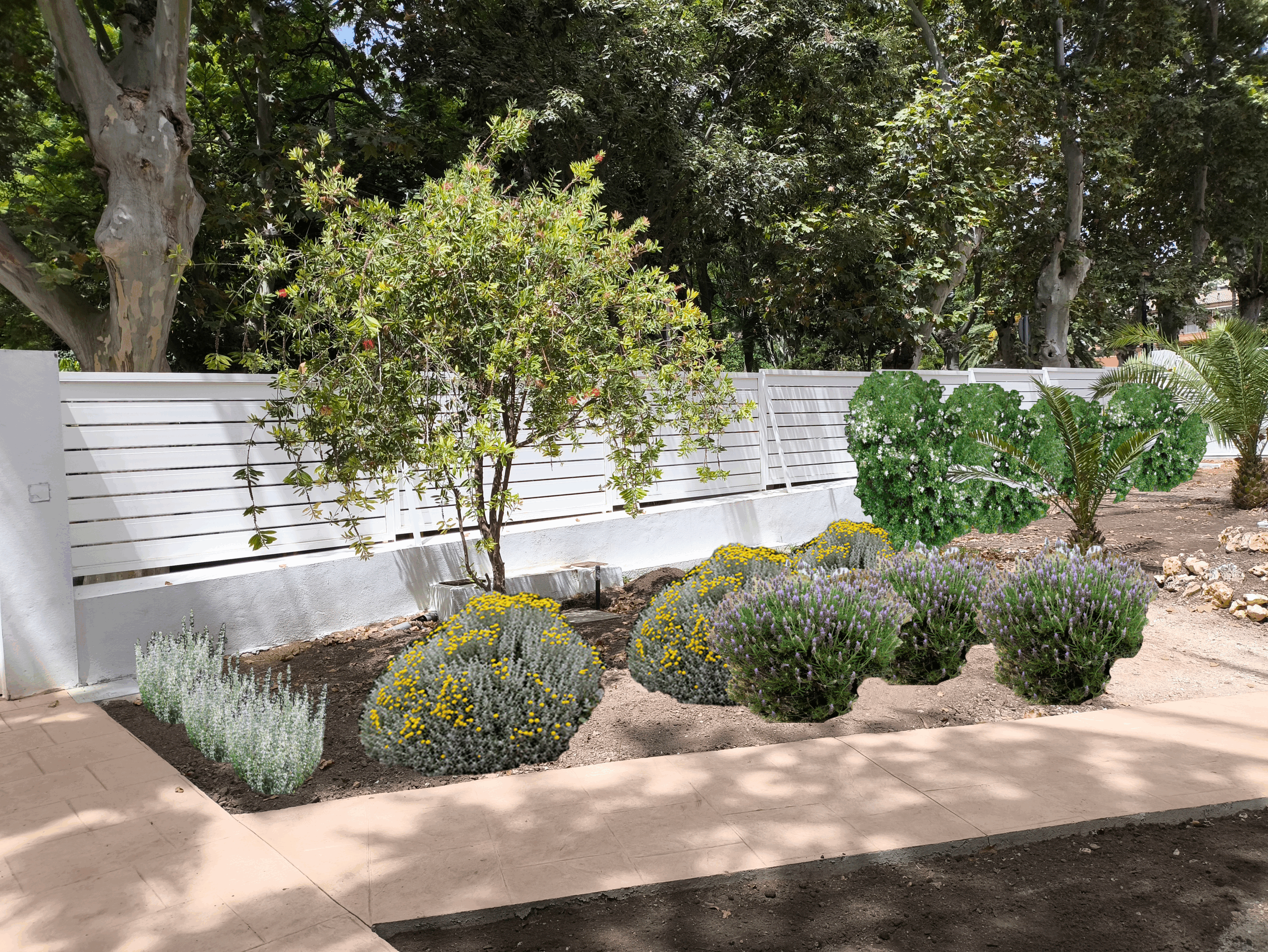
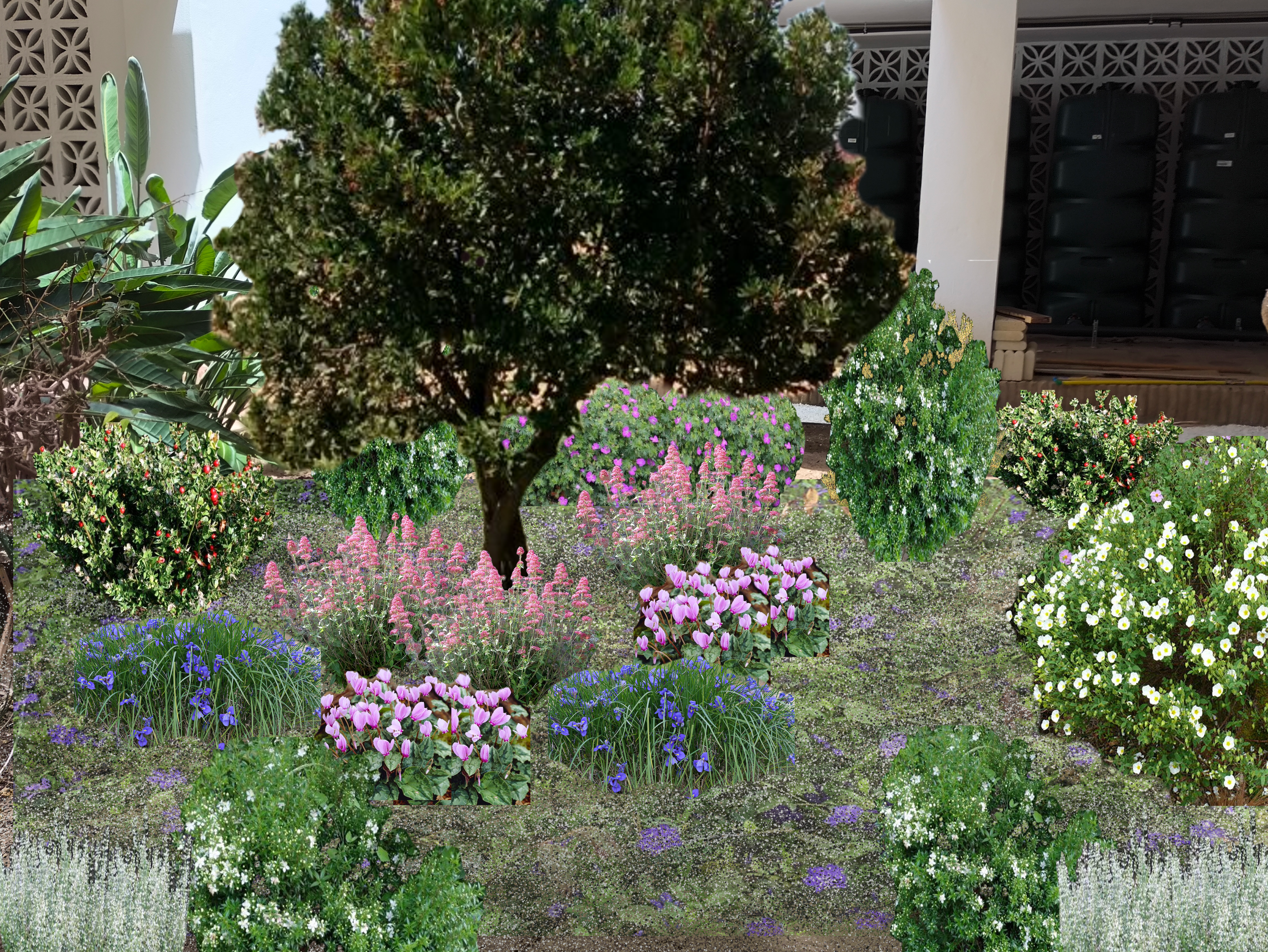
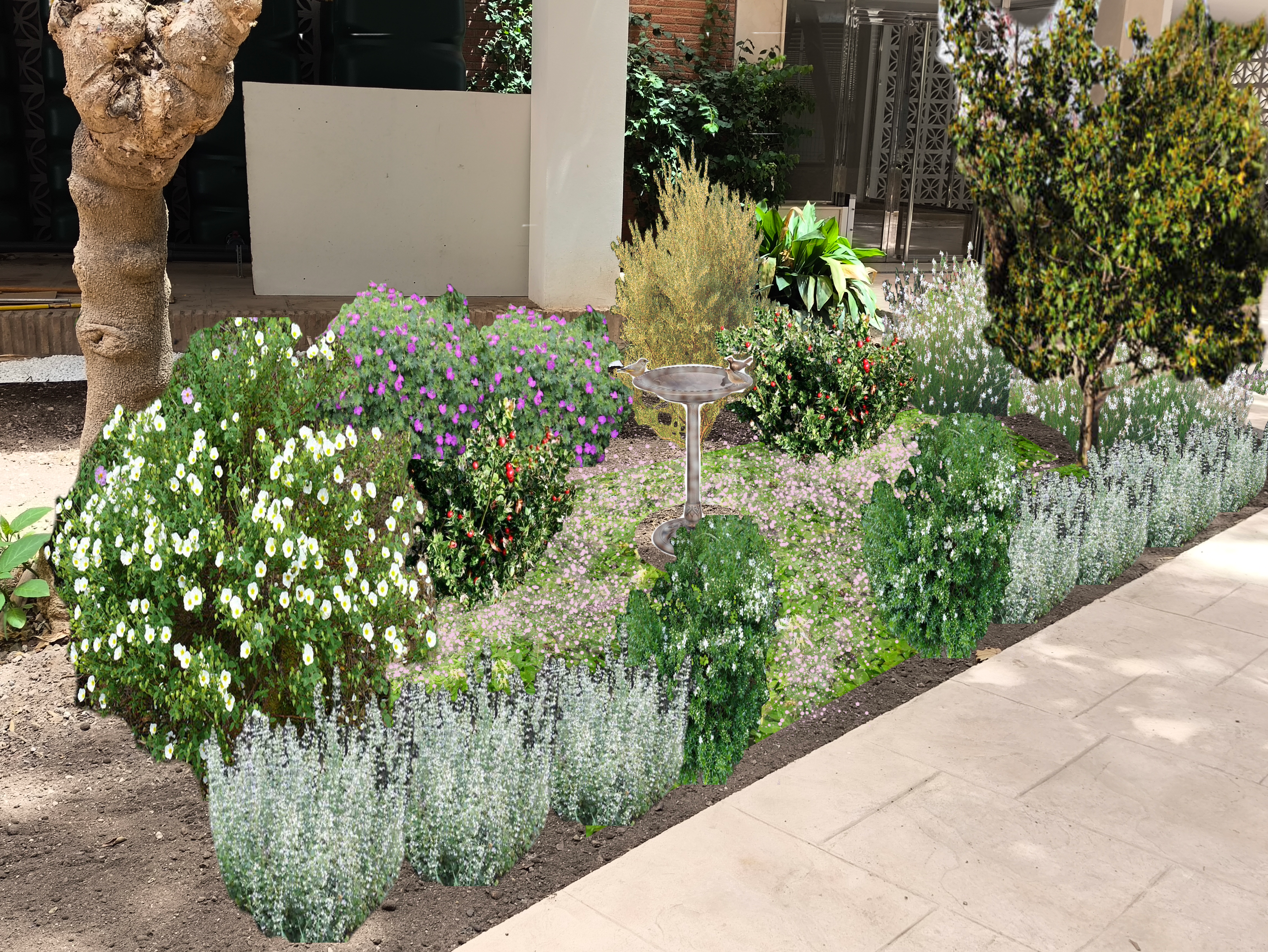
The main objective was to create a Nymph, a small, self-sustaining, and resilient ecosystem that would also be pleasant for the neighbors to observe. We sought a selection of species adapted to the garden’s conditions, fulfilling all the necessary ecosystem functions while maintaining their visual appeal year-round.
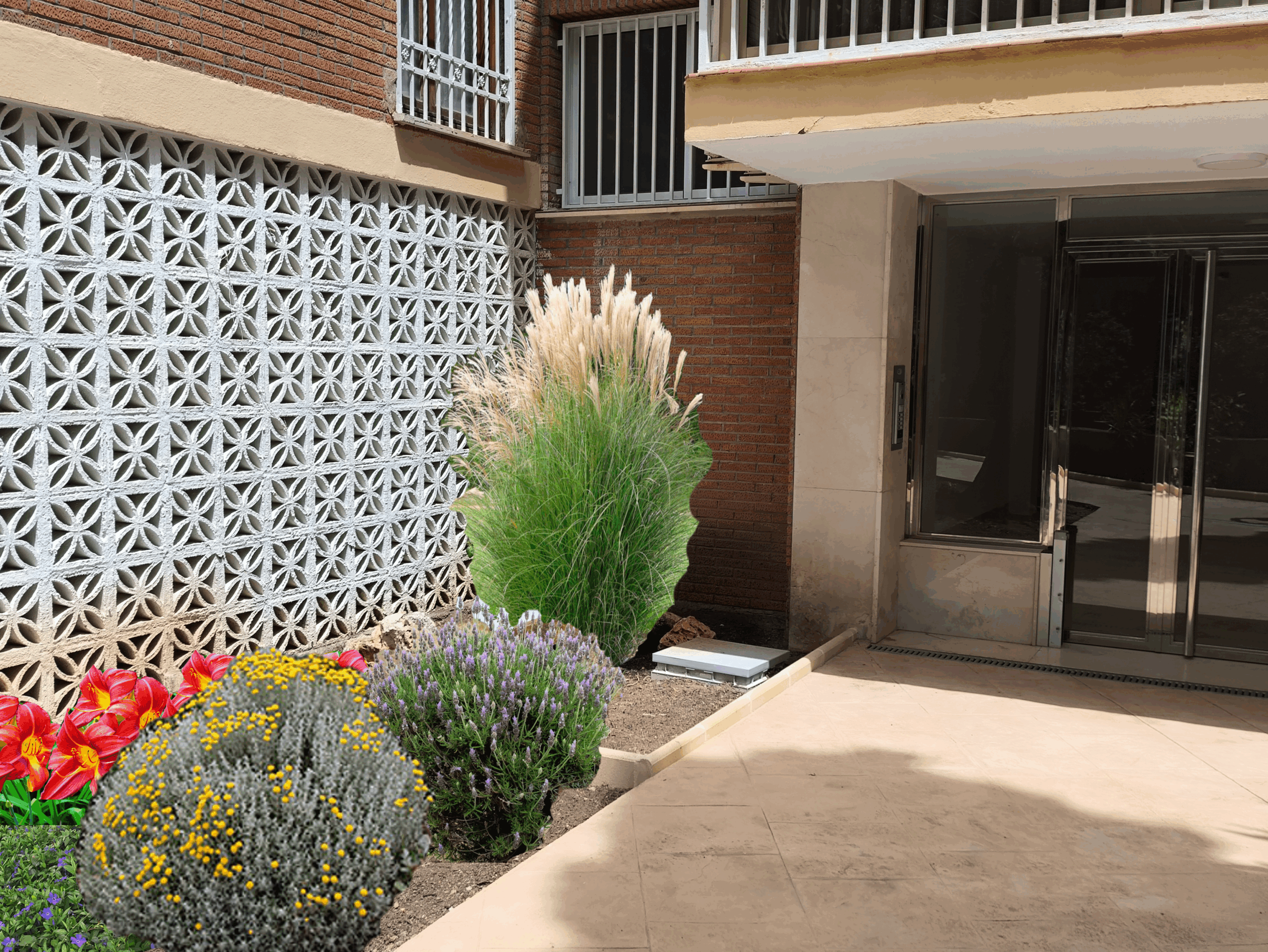
For the main structure, we chose Rhamnus alaternus and Arbutus unedo, supported by Elaeagnus umbellata. At the second level, we proposed Ruscus aculeatus, Geranium sanguineum, Cistus salviifolius, Melica ciliata, and Miscanthus sinensis. At the base, we included Carex comans and a variety of flowers such as Hemerocallis, Centranthus roseus, Cyclamen hederifolium, Iris unguicularis, and Limonium, along with a meadow seed mix. The entire area is surrounded by a low hedge of Calamintha nepeta, Gaura rosea, and Myrtus communis arches.
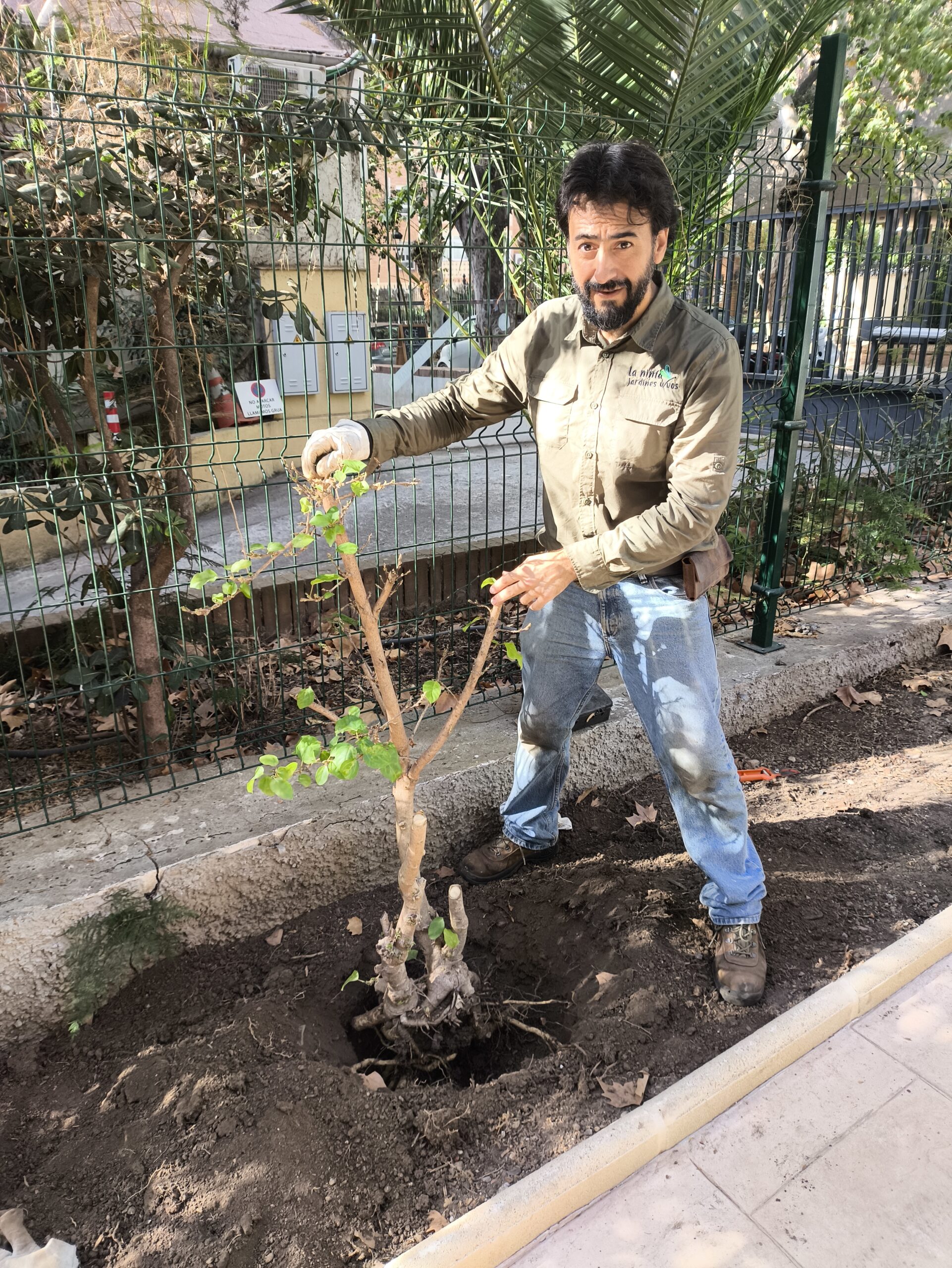
We decided to remove all the bougainvillea and transplant the hibiscus to areas with more sunlight. We also transplanted aspidistras to create a green screen backdrop.
At the entrance to the garages, in addition to the lippia, we added a tall hedge of Myrtus communis, and modified the planters to uniform their appearance, with ribbons and gazanias.
In the flowerbed, we sought to restore the rhythm of the structure with hibiscus plants every two meters, followed by dracaenas, and finishing with Viburnum tinus. The gaps are filled with Crassula ovata, Sansevieria, and Tradescantia pallida. At the entrance to the gateway, a detail was added with cacti and aeoniums, and another with Zamioculcas.
It was a great pleasure working with the client, as all the criticisms he made about the design were constructive.
Plantation
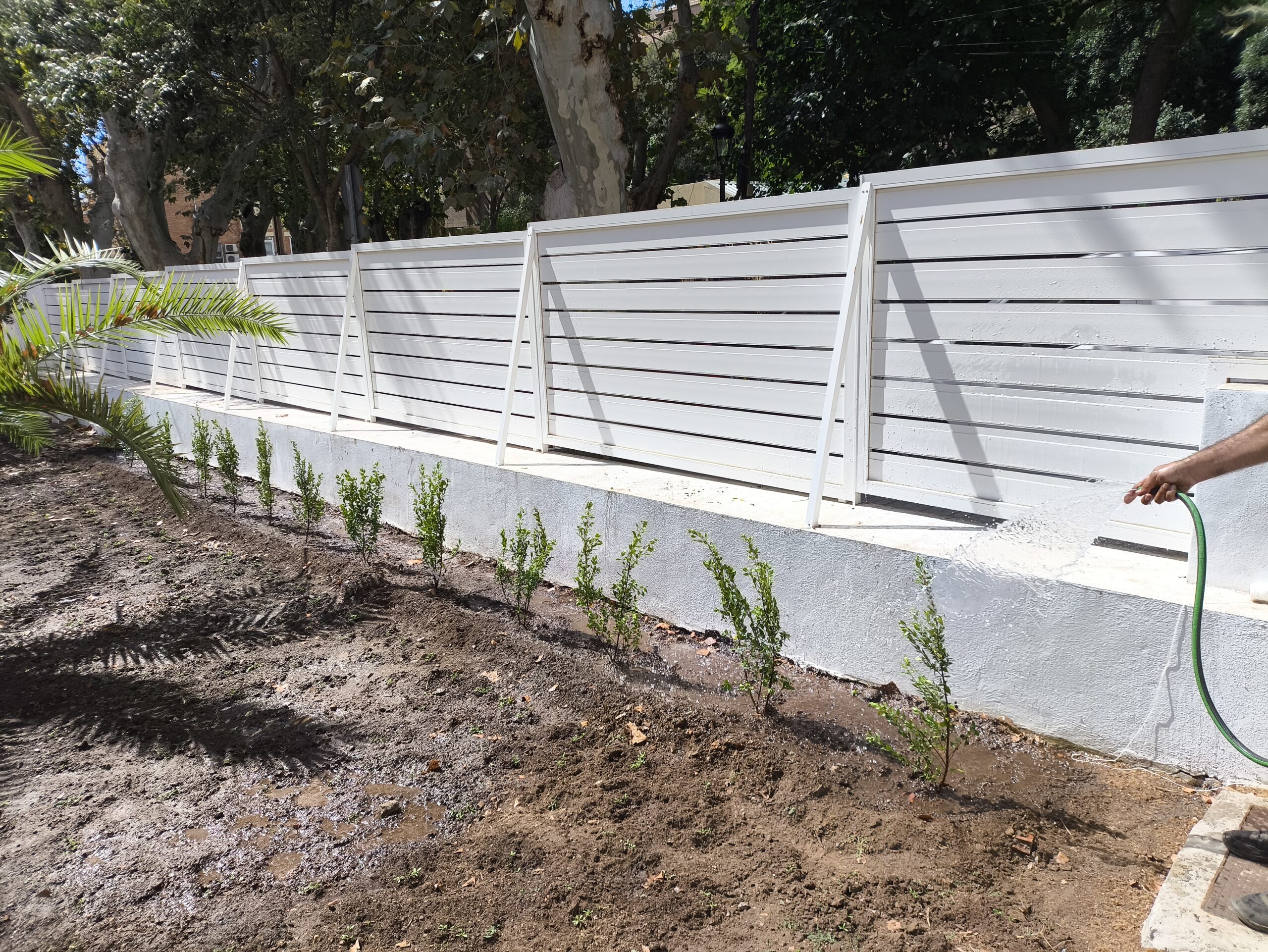
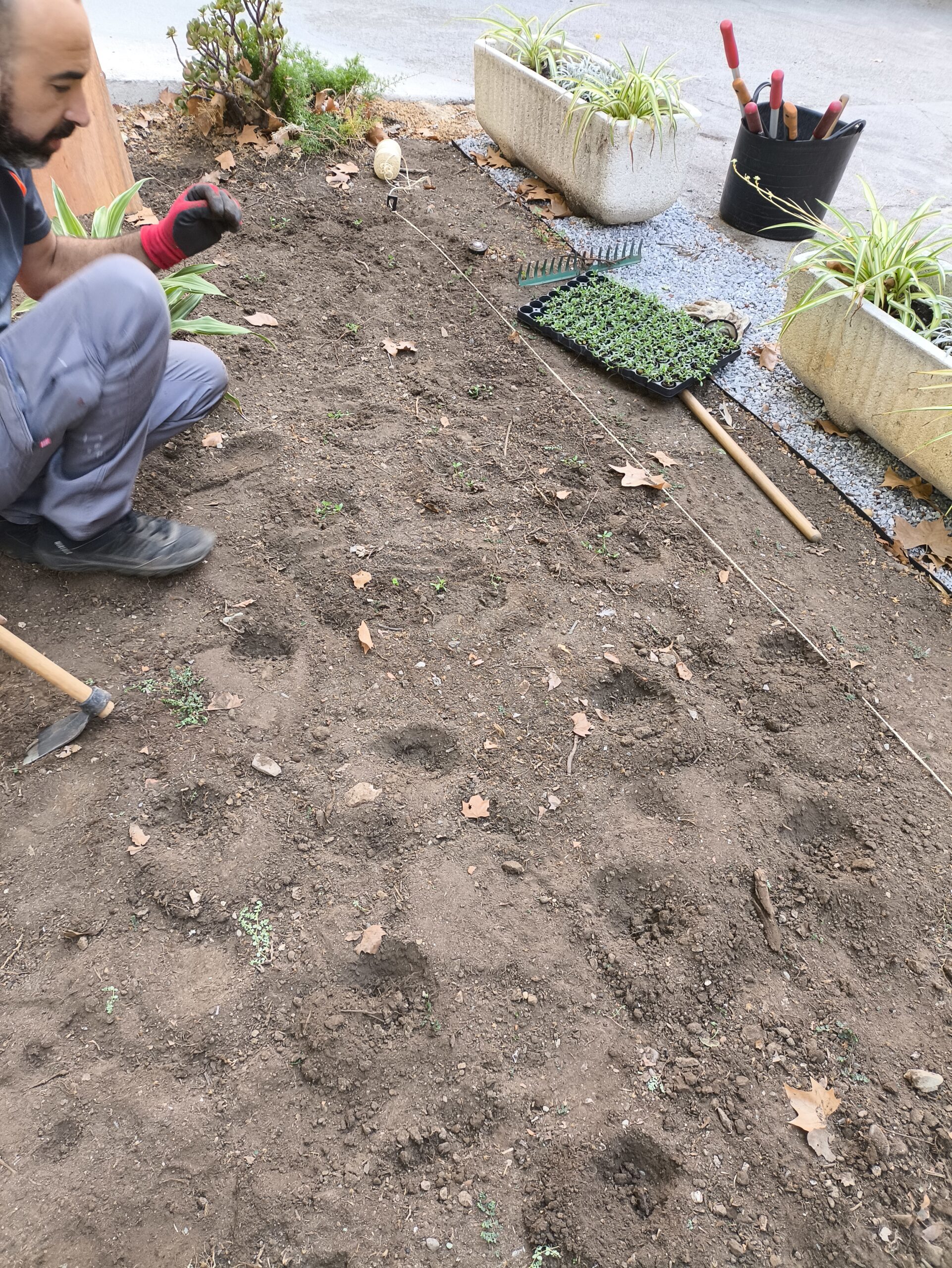
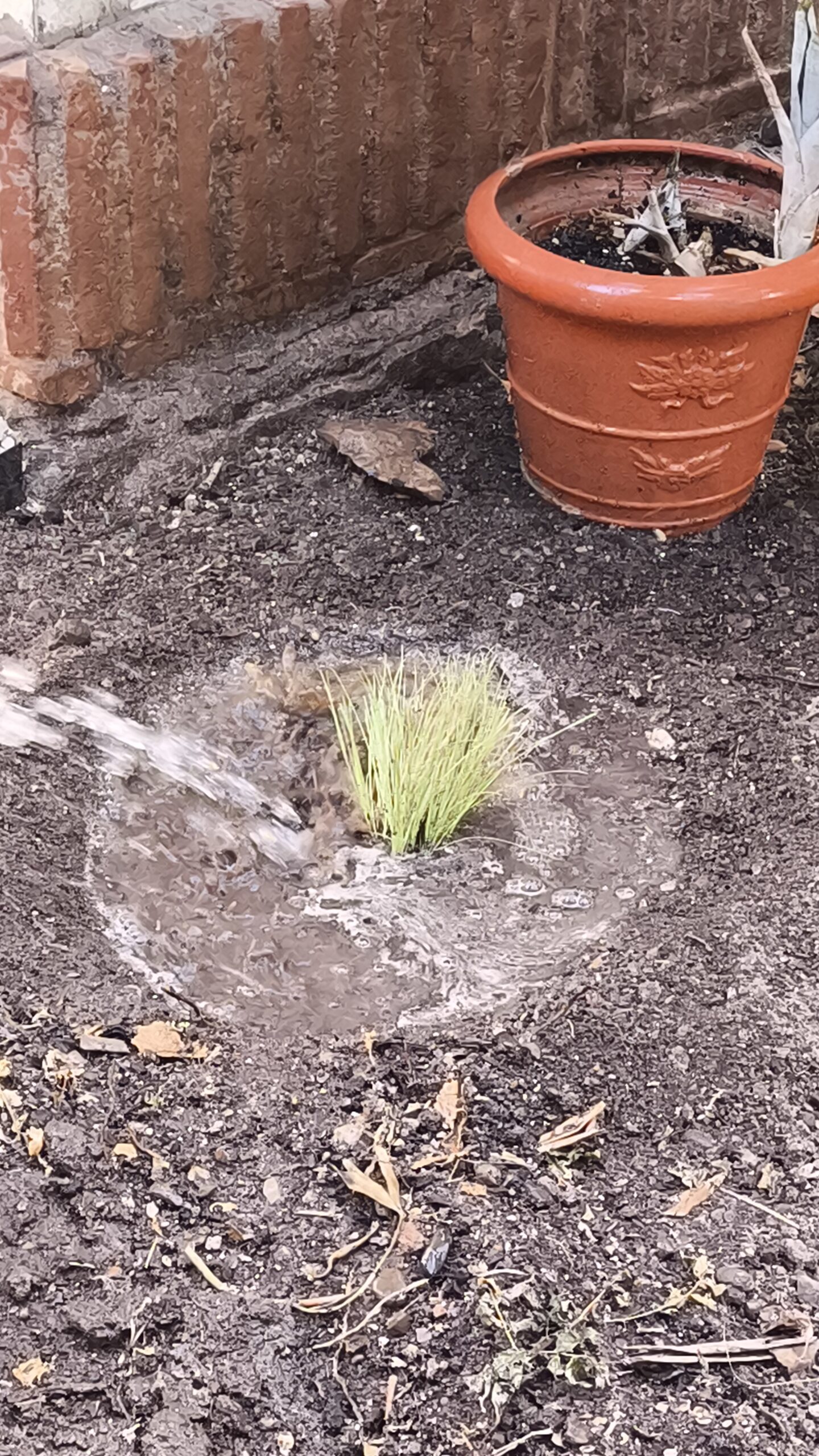
By September, almost all the plants had arrived, and by October, everything was planted. We used the Filippi method (generous watering gaps, small plants, and very infrequent but intense watering). In addition, we included signage indicating that the garden would be maintained using ecological methods (mulch with shredded leaves, zero toxicity, and respect for wildlife).
Share Work
| Work done: Adaptation to partial shade in drylands | Location: Málaga |
| Starting date: June 2025 | Duration: 4 months |
Contact
Shall we create your garden?
Arranging flowerpots
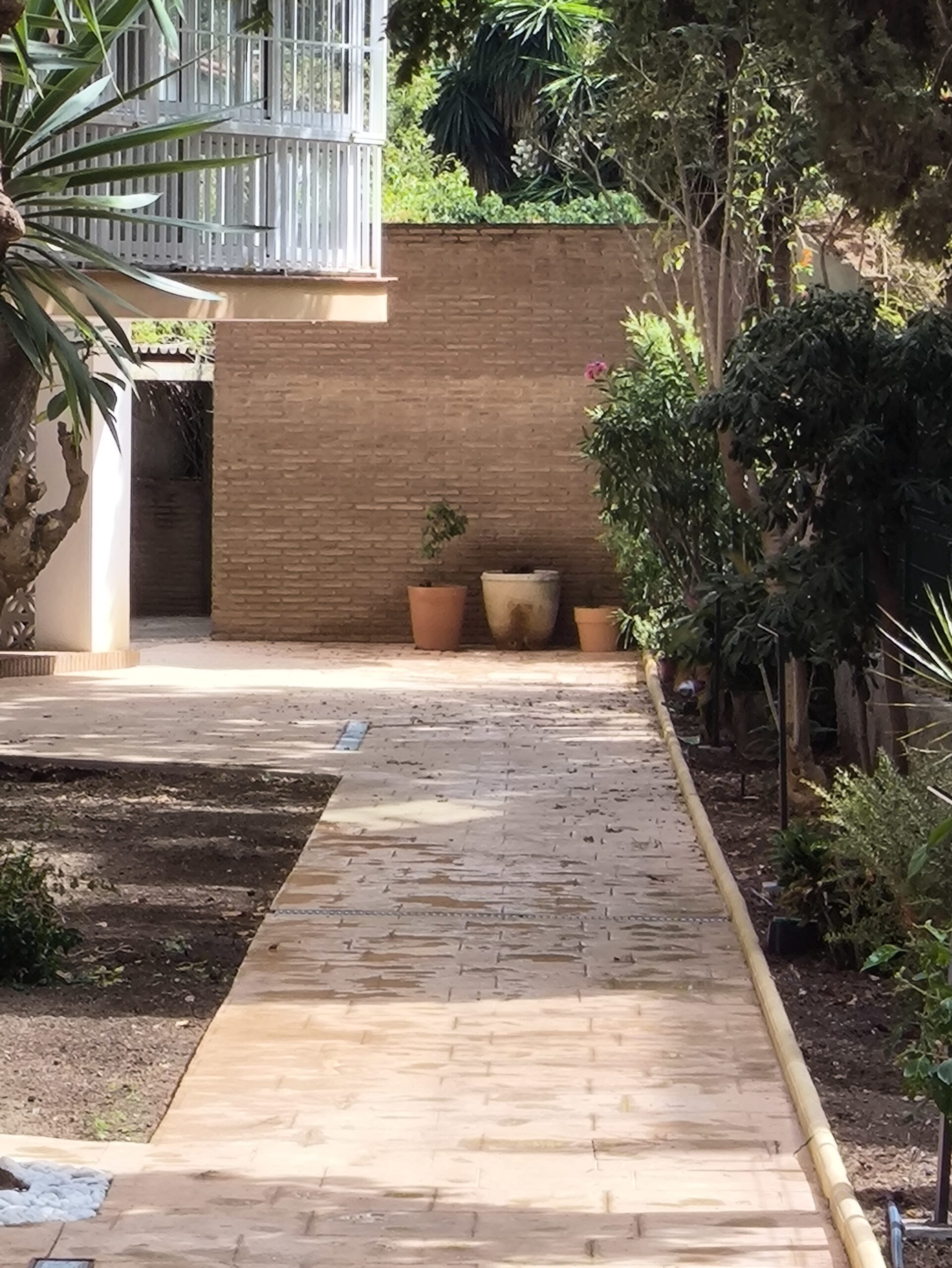
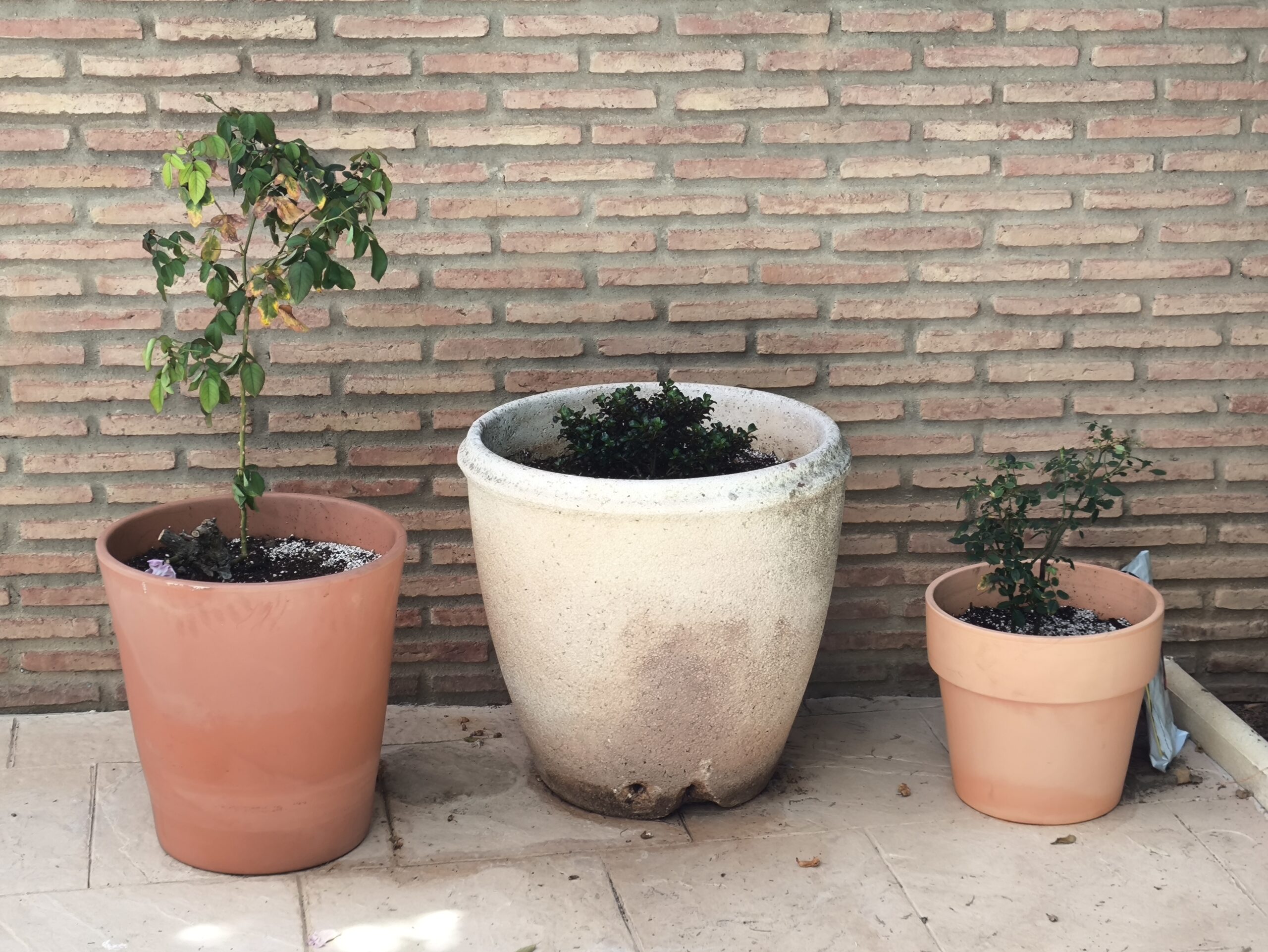
Although they weren’t part of the original ecosystem design, we had two rose bushes that needed to be removed from their planters, and we decided to give them a chance. At the focal point of the path was a broken pot with some aspidistras. We used the pot to add a decorative touch to the garden in the background. In its place, we put three different-sized pots with the two rose bushes and a Coprosma ‘Chocolate’, which were more interesting.
The staff
Our team, in action.